

Voltage regulation is a critical aspect of the operation of three-phase pad-mounted transformers. As a supplier of these transformers, I have witnessed firsthand the importance of understanding how voltage regulation works to ensure reliable and efficient power distribution. In this blog post, I will delve into the intricacies of voltage regulation in three-phase pad-mounted transformers, exploring the underlying principles, methods, and factors that influence this process.
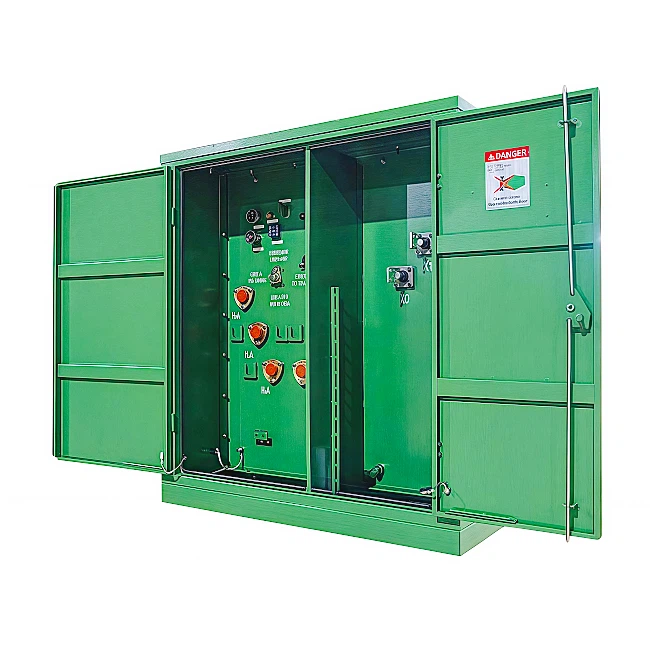

Principles of Voltage Regulation in Three-Phase Pad-Mounted Transformers
At its core, voltage regulation in a three-phase pad-mounted transformer is the process of maintaining a stable output voltage despite variations in the input voltage and load conditions. Transformers operate based on the principle of electromagnetic induction, where an alternating current (AC) in the primary winding creates a magnetic field that induces a voltage in the secondary winding. The ratio of the number of turns in the primary and secondary windings determines the voltage transformation ratio.
However, in real-world applications, the output voltage of a transformer can vary due to several factors, including changes in the input voltage, load current, and impedance of the transformer windings. Voltage regulation is necessary to compensate for these variations and ensure that the voltage supplied to the end-users remains within acceptable limits.
Methods of Voltage Regulation
There are several methods used to regulate the voltage in three-phase pad-mounted transformers. The most common methods include:
On-Load Tap Changers (OLTC)
On-load tap changers are devices that allow the transformer to adjust its turns ratio while the transformer is energized and under load. OLTCs consist of a series of taps on the transformer winding that can be switched to change the number of turns in the winding, thereby adjusting the output voltage. This method provides continuous voltage regulation and is suitable for applications where the load varies frequently.
Off-Circuit Tap Changers (OCTC)
Off-circuit tap changers are similar to OLTCs, but they require the transformer to be de-energized before the taps can be changed. OCTCs are typically used in applications where the load is relatively stable and the voltage adjustments are infrequent.
Automatic Voltage Regulators (AVR)
Automatic voltage regulators are electronic devices that monitor the output voltage of the transformer and adjust the excitation current of the transformer's magnetic core to maintain a constant output voltage. AVRs are commonly used in conjunction with OLTCs or OCTCs to provide more precise voltage regulation.
Factors Affecting Voltage Regulation
Several factors can affect the voltage regulation performance of a three-phase pad-mounted transformer. These factors include:
Load Current
The load current flowing through the transformer windings causes a voltage drop due to the resistance and reactance of the windings. As the load current increases, the voltage drop also increases, resulting in a decrease in the output voltage. Voltage regulation is necessary to compensate for this voltage drop and maintain a stable output voltage.
Input Voltage Variations
The input voltage to the transformer can vary due to factors such as grid fluctuations, line losses, and generator output variations. These input voltage variations can cause the output voltage of the transformer to fluctuate, and voltage regulation is required to ensure that the output voltage remains within acceptable limits.
Transformer Impedance
The impedance of the transformer windings affects the voltage regulation performance of the transformer. A transformer with a higher impedance will have a larger voltage drop under load, resulting in poorer voltage regulation. Therefore, it is important to select a transformer with an appropriate impedance for the specific application.
Temperature
The temperature of the transformer windings can affect the resistance of the windings, which in turn can affect the voltage regulation performance of the transformer. As the temperature of the windings increases, the resistance also increases, resulting in a larger voltage drop under load. Therefore, it is important to ensure that the transformer operates within its specified temperature range to maintain good voltage regulation.
Importance of Voltage Regulation in Three-Phase Pad-Mounted Transformers
Voltage regulation is crucial for the reliable and efficient operation of three-phase pad-mounted transformers. Here are some key reasons why voltage regulation is important:
Equipment Protection
Many electrical devices and equipment are designed to operate within a specific voltage range. If the voltage supplied to these devices is too high or too low, it can cause damage to the equipment, reduce its lifespan, and lead to costly repairs or replacements. Voltage regulation ensures that the voltage supplied to the end-users remains within the acceptable range, protecting the equipment from damage.
Power Quality
Voltage fluctuations can cause problems such as flickering lights, equipment malfunctions, and data loss. Voltage regulation helps to maintain a stable voltage supply, improving the power quality and reducing the likelihood of these problems occurring.
Energy Efficiency
When the voltage supplied to electrical equipment is too high, it can cause the equipment to consume more energy than necessary, resulting in increased energy costs. Voltage regulation helps to optimize the voltage supply, reducing energy consumption and improving energy efficiency.
Our Three-Phase Pad-Mounted Transformers
As a supplier of three-phase pad-mounted transformers, we offer a wide range of products that are designed to provide reliable and efficient voltage regulation. Our transformers are equipped with advanced voltage regulation technologies, such as OLTCs and AVRs, to ensure precise and stable voltage control.
We also offer a variety of insulation classes and sealing options to meet the specific requirements of different applications. For example, our H Class Insulation Three Phase Pad Transformer provides high-temperature resistance and excellent insulation performance, making it suitable for harsh environments. Our Fully Sealed Three Phase Pad Mounted Transformer offers protection against dust, moisture, and other environmental factors, ensuring long-term reliability. And our Dead Front Pad Mounted Transformer provides enhanced safety by eliminating exposed live parts.
Contact Us for Procurement and Consultation
If you are in need of a three-phase pad-mounted transformer with reliable voltage regulation, we would be delighted to assist you. Our team of experts can provide you with detailed information about our products, help you select the right transformer for your specific application, and offer technical support throughout the procurement process.
Whether you are a utility company, an industrial facility, or a commercial building owner, we have the expertise and products to meet your power distribution needs. Contact us today to start a discussion about your requirements and explore how our three-phase pad-mounted transformers can benefit your project.
References
- Electric Power Systems by J. Duncan Glover, Mulukutla S. Sarma, and Thomas J. Overbye
- Power System Analysis and Design by John J. Grainger and William D. Stevenson
- Transformers: Theory, Design, and Application by George W. T. Arkkio