

Oil Immersed Transformer
VKE: Leading Oil Immersed Transformer Manufacturer
Founded in 2003, Jiangsu VKE Transformer Co., Ltd. is a professional manufacturer of high-quality compact substation. Our facility adopts a full-process layout that seamlessly connects each step - from raw materials to finished products - to achieve a smooth workflow. We are committed to becoming your trusted partner.


Why Choose Us
Quality Assurance
VKE employs industry-leading automated testing systems to conduct full life-cycle monitoring for every transformer. The combination of precision instruments and digital platforms ensures that our products meet strict quality standards and custom requirements.
One-Stop Service
VKE ensures that every transformer we deliver undergoes rigorous quality checks. We offer a one-stop service, including quotation, manufacturing, installation, commissioning, and training.
Production Capacity
With two production bases covering 33,660 m² and a dedicated team of 110+ employees, we achieve an annual production capacity of 6,000 MVA.
Global Certification
We are IEC, CE, UL and regional safety certified. With high-performance products and top-quality service, our products are sold in many countries and regions worldwide.
Types of Oil Immersed Transformer
1000 Kva Oil Filled Transformer: It features low load losses, stable voltage output and high dielectric strength, suitable for a wide range of applications.
10kv Oil Immersed Transformer: A 10kv oil-immersed transformer is a type of electrical transformer that uses oil as an insulating and cooling medium.
20kv Oil Immersed Distribution Transformer: VKE 20kV oil immersed distribution transformer, characterized by improved efficiency and safety, is manufactured with a high-permeability silicon steel core and insulating oil with a high ignition point.
Hermetically Sealed Oil Filled Transformer: VKE hermetically sealed oil filled transformer has gradually become the preferred choice for power companies and industrial users because of its superior performance.
11kv Distribution Transformer: VKE 11kV distribution transformer has gained international recognition for its efficient heat dissipation, outstanding insulating properties and superior weather resistance.
22 Kv 200 Kva Transformer: VKE 22 kV 200 kVA transformer is designed for efficient and reliable power distribution in medium-voltage networks.
Technical Specifications
|
Rated Capacity |
50~2,500kVA |
|
Rated HV |
22kV |
|
Rated LV |
0.4kV |
|
Vector Group |
Dyn11/Yyn0 |
|
Impedance |
4% |
|
Temperature Rise |
60/65K |
|
Core Material |
Silicon Steel |
|
Winding Material |
Copper/Aluminum |
|
Cooling System |
ONAN/ONAF |
|
Ambient Air Temperature |
-25°C ~+40°C (Average: +20°C) |
Heat Dissipation Performance
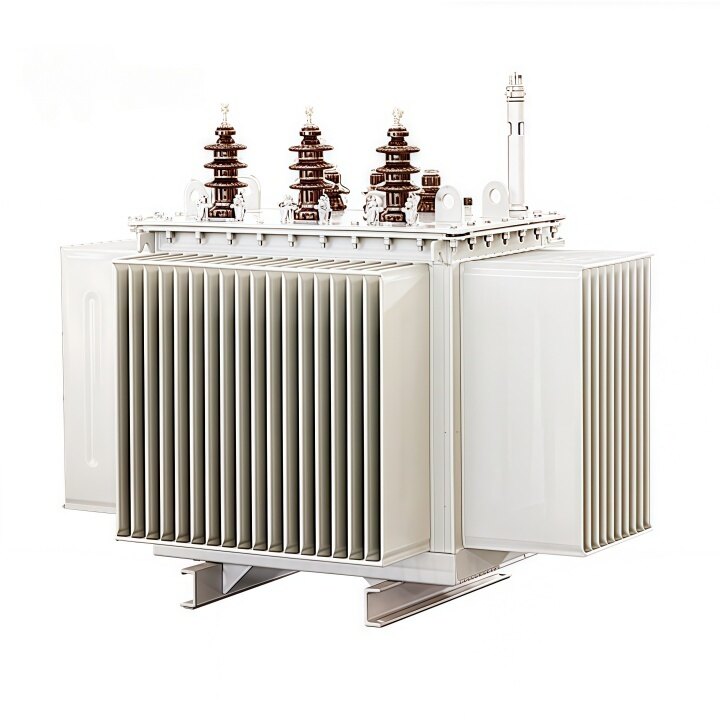
Oil immersed transformers achieve efficient heat dissipation through natural convection of insulating oil, effectively reducing operating temperature, extending equipment life, and ensuring stable operation under high load conditions.
Excellent Insulation Capability
Insulating oil not only has good cooling effect, but also provides excellent electrical insulation performance, which helps to improve operational safety and prevent electrical faults from occurring.
High Reliability And Durability
The structure is sturdy, the operation is stable, and it can maintain reliable performance under long-term continuous loads and complex environments, meeting the long-term stable power supply needs of industry and the power grid.
Low Loss And High Efficiency
Oil immersed transformers have the characteristics of low no-load and load losses, effectively reducing energy consumption while ensuring power output, and helping users reduce operating costs.
Strong Environmental Adaptability
Suitable for outdoor and various harsh working conditions, it has good moisture resistance, dust resistance, and high temperature resistance, ensuring stable operation under different climatic conditions.
Easy Maintenance And Long Lifespan
During operation, the oil can be regularly inspected and replaced, making maintenance convenient; Combined with excellent structural design, the overall lifespan is long, the cost-effectiveness is high, and the return on investment is better.
Types of Oil Used in Oil Immersed Transformer
The choice of oil significantly affects transformer safety, efficiency, and environmental impact. Common types of oil include:
Mineral Oil
Most widely used due to its cost-effectiveness and thermal properties.
Silicone Oil
Offers higher fire resistance but is more expensive.
Natural Ester (Vegetable-based oil)
Biodegradable and environmentally friendly; gaining popularity in eco-conscious applications.
Synthetic Ester
Excellent insulation and fire safety properties; suitable for compact, high-risk environments.
Common Applications of Oil Immersed Transformers

Power Plants
Facilitating voltage transformation for efficient power transmission.
Industrial Facilities
Powering heavy machinery with stable voltage.
Commercial Buildings
Ensuring reliable power supply.
Renewable Energy
Integrating with solar and wind power systems.
The Main Differences Between Oil Immersed Transformers and Dry Type Transformers
The differences between oil immersed transformer and dry type transformer go beyond their cooling mechanisms—they shape their usability in diverse scenarios:
|
Aspect |
Oil Immersed Transformer |
Dry Type Transformer |
|
Cooling Medium |
Insulating oil |
Air or gas |
|
Safety |
Higher fire risk due to oil |
Safer; no risk of oil-related fires |
|
Maintenance |
Requires regular oil testing |
Minimal maintenance |
|
Capacity |
Suitable for large capacities |
Limited to medium or low capacities |
|
Installation |
Outdoor or separate transformer rooms |
Indoor-friendly |
|
Cost |
Lower initial cost |
Higher initial cost |
The manufacturing process of oil-immersed transformers involves several critical steps to ensure the final product meets all performance, safety, and reliability standards. These steps typically include:
Design and Engineering: The first step is designing the transformer according to specific customer requirements, voltage levels, and industry standards. Detailed engineering drawings are made for the core, windings, tank, and other components.
Core Manufacturing: The transformer core is typically made of high-quality electrical steel, cut into thin sheets to minimize energy loss. The core is then assembled in a specific configuration to ensure efficient magnetic flux and low core losses.
Winding Manufacture: Copper or aluminum wire is used to wind the primary and secondary coils, which are essential for voltage conversion. The windings are carefully designed to ensure proper electrical and thermal performance under load.
Tank and Cooling System: The transformer tank is fabricated and then welded, ensuring it is airtight and strong. The cooling system, whether natural or forced, is installed to ensure the transformer operates efficiently under different loading conditions.
Assembly
The core, windings, and tank are assembled together. The insulation materials are added between the windings to prevent short circuits and ensure electrical safety.
Oil Filling
After assembly, the transformer is filled with high-quality transformer oil that provides both insulation and cooling. The oil is carefully filtered to ensure it is free from impurities and moisture.
Final Testing and Inspection
Before leaving the factory, the transformer undergoes a series of tests to verify its performance, safety, and compliance with standards.
Oil Immersed Transformer Installation Requirements
Oil-immersed transformers should be securely installed on raised sleepers to prevent contact with the ground.
Verify complete installation of bushing pressure bolts and integrity of transformer box to prevent oil leaks.
Brackets for transformer inlet and outlet must adhere to design specifications. Ensure reliable connection to the grounding grid.
Use appropriate terminal components and ensure clean, oxide-free connections with power compound grease.
Independently connect oil-immersed transformer box and neutral point grounding wire to the main grounding grid with secure crimping or welding.
Use galvanized bolts with flat washers and spring washers for high and low voltage wiring connections.
Ensure correct phase alignment and clear phase color markings for high and low voltage wiring.
Verify correct phase sequence for three-phase power supply to prevent fan malfunction. Ensure temperature control devices operate accurately.
Customization Process
Consultation and Contact
Reach out to us via email, phone, or our website to discuss your specific requirements and project goals.
Design Confirmation
We will create a basic design plan based on your requirements and confirm the specific design details with you.
Quotation and Agreement
Provide a detailed quotation, discuss, and sign the mutual agreement to finalize the project details.
Payment Confirmation
Make the payment to confirm the development project. 30% deposit in advance, 70% balance against the copy of B/L..
Manufacturing
We start the manufacturing process and oversee progress to ensure timely production. This helps us maintain efficiency and meet deadlines.
Logistics and Delivery
Together, we conduct the final acceptance to verify that the transformer meet your quality standards and requirements. By doing so, we ensure everything aligns with your expectations.
Shipping and Delivery
|
Payment Terms |
We accept LC, T/T,Western Union, PayPal and so on. If others, we can discuss. |
|
Delivery Time |
Usually it will take about 30 days after order confirmed. |
|
Package |
For the small capacity, we will use carton, but for big capacity, we should use strong wooden case for protection. |
|
Transportation |
For small package, we will send it by Express, such as DHL,FedEx,,UPS,TNT,EMS. For big package, we will sent you by sea , air or train. |
Our Certificates


FAQ
We're professional oil immersed transformer manufacturers and suppliers in China, specialized in providing high quality customized products. We warmly welcome you to buy oil immersed transformer for sale here from our factory. For price consultation, contact us.
Three Phase Oil Immersed Power Transformer, High Performance Oil Sealed Transformer, 1000 Kva Oil Filled Transformer