

Dry Type Transformer
VKE: Leading Dry Type Transformer Manufacturer
Founded in 2003, Jiangsu VKE Transformer Co., Ltd. is a professional manufacturer of high-quality compact substation. Our facility adopts a full-process layout that seamlessly connects each step - from raw materials to finished products - to achieve a smooth workflow. We are committed to becoming your trusted partner.


Why Choose Us
Quality Assurance
VKE employs industry-leading automated testing systems to conduct full life-cycle monitoring for every transformer. The combination of precision instruments and digital platforms ensures that our products meet strict quality standards and custom requirements.
One-Stop Service
VKE ensures that every transformer we deliver undergoes rigorous quality checks. We offer a one-stop service, including quotation, manufacturing, installation, commissioning, and training.
Production Capacity
With two production bases covering 33,660 m² and a dedicated team of 110+ employees, we achieve an annual production capacity of 6,000 MVA.
Global Certification
We are IEC, CE, UL and regional safety certified. With high-performance products and top-quality service, our products are sold in many countries and regions worldwide.
Types of Dry Type Transformer
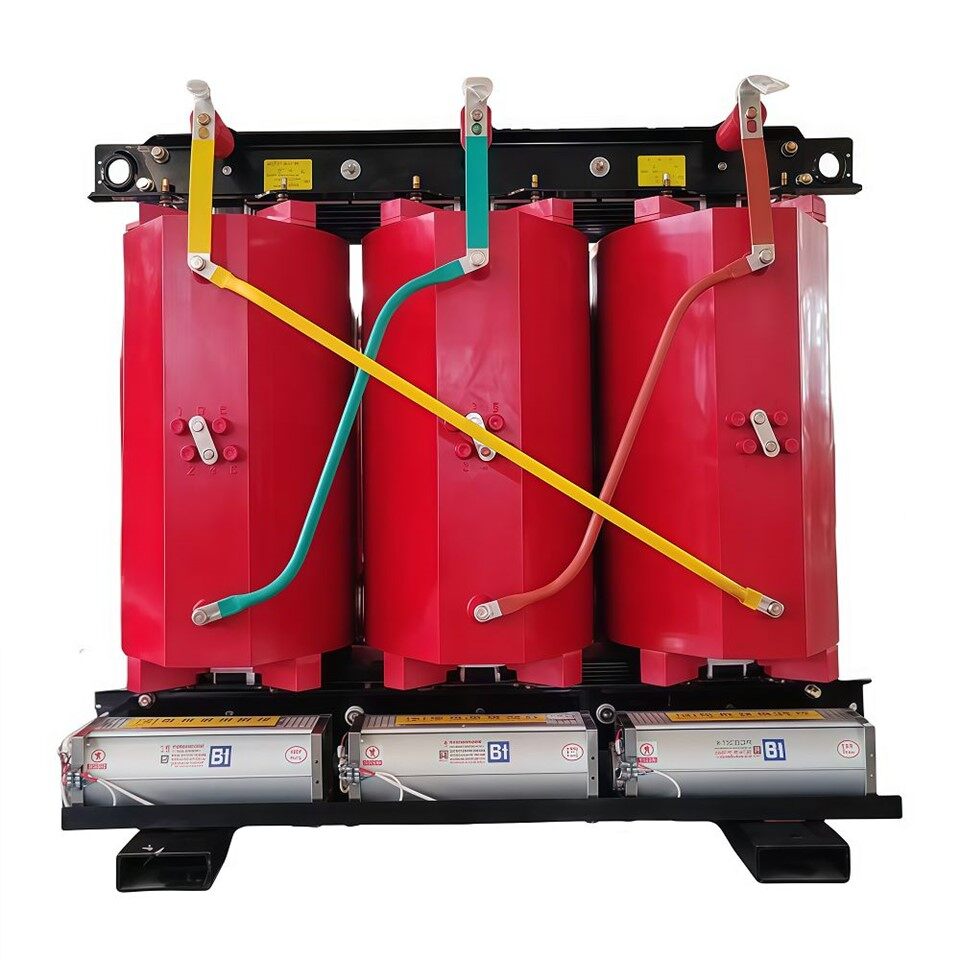
Dry Type Power Transformer: The dry type power transformer produced by VKE has been applied in an increasing number of industries due to its energy-saving, high-efficient, safe and environment-friendly features.
Amorphous Alloy Dry Type Transformer: VKE amorphous alloy dry type transformer achieves ultra-low no-load losses through its amorphous core. Combined with oil-free design, it provides users with an efficient, safe, reliable and cost-effective power solution throughout the entire life cycle.
H Class High Temp Resistant Dry-type Transformer: These transformers is custom-designed for the high-temperature workshop condition of a customer’s steel plant, offering a 60% longer service life compared to conventional products.
Low-loss Energy-efficient Dry-type Transformer: Our transformers adopt advanced materials and optimized design to reduce no-load and load losses, achieving up to 30% higher efficiency compared to conventional transformers.
Epoxy Resin Dry Transformer: Epoxy resin dry transformer uses epoxy resin as the primary insulating material. The windings are encapsulated in epoxy resin through vacuum casting or winding processes, creating a solid-state insulation structure that eliminates the need for insulating oil.
Technical Parameters
|
Rated Capacity(kVA) |
Vector Group |
Voltage Combination(kV) |
No-load Current(%) |
No-load Loss(W) |
On-load Loss(W) |
Short-circuit Impedance(%) |
|
500 |
Dyn11 |
6-11±2*2.5%/0.4 |
1.0 |
1160 |
4590 |
4.0 |
|
20-24±2*2.5%/0.4 |
1.1 |
1350 |
5460 |
6.0 |
||
|
33-38.5±2*2.5%/0.4 |
1.1 |
1620 |
6270 |
6.0 |
Enhanced Safety: Dry-type transformers are less likely to cause a fire or explode, making them a safer option that doesn’t require a fire-proof enclosure.
Maintenance-free: They require no oil changes or oil tests, reducing maintenance costs and environmental impact.
Easy Installation: These transformers can be installed close to the load, reducing the need for lengthy and costly low-voltage cables.
Reduced Pollution: You can reduce pollution and environmental risks such as leaks and spills when you use a dry-type transformer.
Overload Support: They have better heat dissipation and thermal endurance than oil-filled transformers, supporting overloads effectively.
Easy Inspection: Dry-type transformers are easier to inspect. You can easily remove the coils and connections to see the transformer’s components.
Insulation Classes for Dry Type Transformer
|
Class of Insulation |
Class of Temperature Resistance |
Winding Temperature Rise Limit |
Hotspot Temperature |
Insulation Materials |
|
A |
105℃ |
60K |
105℃ |
Impregnated paper, cotton yarn, magnet wire |
|
E |
120℃ |
75K |
120℃ |
PET film, poxy resin |
|
B |
130℃ |
80K |
130℃ |
Mica, fiberglass (reinforced) |
|
F |
155℃ |
100K |
155℃ |
High-temperature epoxy resin, Nomex® paper |
|
H |
180℃ |
125K |
180℃ |
Silicone rubber, polyimide, mica |
|
C |
>180℃ |
Design-dependent |
>180℃ |
Ceramic, PTFE, advanced composite materials |
Application of Dry Type Transformer
Commercial Buildings: Dry-type transformers are commonly used in commercial buildings such as office complexes, shopping malls, and hospitals. Their low fire risk and maintenance-free operation make them ideal for indoor installations with critical space and safety.
Industrial Facilities: In industrial settings, dry-type transformers are often used to supply power to machinery and equipment. Their ability to handle high voltage and harsh operating conditions ensures they can reliably meet the demands of heavy-duty applications.
Renewable Energy Systems: Dry-type transformers, including wind and solar power plants, are crucial in renewable energy systems. Their environmentally friendly design aligns with the green energy goals of these installations, while their efficiency and durability help maximize energy output.
Data Centers: Data centers require highly reliable power distribution systems to ensure continuous operation. Dry-type transformers are preferred in these settings due to their low maintenance needs, high efficiency, and reduced fire risk, which are vital in protecting sensitive electronic equipment.
Residential Areas: In residential areas, dry-type transformers are used for power distribution in apartment complexes and housing developments. Their quiet operation and compact design make them suitable for locations where space is limited and noise must be minimized.
Select a Suitable Installation Location
Install dry-type transformers in well-ventilated, dry areas free from corrosive gases and dust.
Foundation Preparation
The transformer foundation must be level, stable, and constructed with embedded steel plates that are flat and free from voids.
Positioning and Fixing
Position the transformer using a crane or temporary wooden rails. Ensure the crane’s load capacity matches the transformer's weight.
Electrical Wiring
Ensure adequate clearance between live parts and from live parts to the ground. After wiring, verify that all connections are secure and compliant with standards.
Grounding Requirements
Connect the transformer’s designated grounding bolt to the protective grounding system. After installation, measure and verify grounding resistance using professional instruments and schedule regular inspections.
Inspection and Commissioning
Before energizing, conduct thorough checks of appearance, wiring, grounding, and electrical parameters. Only after all parameters are confirmed stable should load operation begin.
Environmental Considerations
Choose the appropriate structure and cooling method based on transformer capacity and usage conditions to ensure efficient operation.
Production Process
Core Cutting: Silicon steel is cut into required shape using molds.
Core Cutting: Silicon steel is cut into required shape using molds.
Core Assembly: High-quality materials effectively reduce the no-load loss and noise level.
Winding: Copper/aluminum wires, winding methods/structures are selected based on design requirements.
Final Assembly: Meticulously assemble all components & carefully inspect the fit between parts.
Testing: Routine tests must be conducted to verify that the transformers' performance meets design requirements.
Final Checks: A comprehensive final inspection before leaving the factory.
Delivering: Efficient packing & delivery handled by trusted logistics partners.
Customization Process
Consultation and Contact
Reach out to us via email, phone, or our website to discuss your specific requirements and project goals.
Design Confirmation
We will create a basic design plan based on your requirements and confirm the specific design details with you.
Quotation and Agreement
Provide a detailed quotation, discuss, and sign the mutual agreement to finalize the project details.
Payment Confirmation
Make the payment to confirm the development project. 30% deposit in advance, 70% balance against the copy of B/L..
Manufacturing
We start the manufacturing process and oversee progress to ensure timely production. This helps us maintain efficiency and meet deadlines.
Logistics and Delivery
Together, we conduct the final acceptance to verify that the transformer meet your quality standards and requirements. By doing so, we ensure everything aligns with your expectations.
Shipping and Delivery
|
Payment Terms |
We accept LC, T/T,Western Union, PayPal and so on. If others, we can discuss. |
|
Delivery Time |
Usually it will take about 30 days after order confirmed. |
|
Package |
Wooden Box Packaging: Ensures safety during transportation with fumigated logs and steel corner reinforcements to prevent damage. Wooden Pallet Packaging: Provides a cost-effective solution for sea transportation, ensuring transformers are securely fastened with straps and wrapped in protective film. |
|
Transportation |
For small package, we will send it by Express, such as DHL,FedEx,,UPS,TNT,EMS. For big package, we will sent you by sea , air or train. |
Our Certificates


FAQ
We're professional dry type transformer manufacturers and suppliers in China, specialized in providing high quality customized products. We warmly welcome you to buy dry type transformer for sale here from our factory. For price consultation, contact us.
Amorphous Alloy Dry Type Transformer, Industrial Grade Dry Type Power Transformer, Dry Type Power Transformer