

Hey there! As a supplier of Single Phase Pad Mount Transformers, I've been getting a lot of questions lately about the electromagnetic interference (EMI) characteristics of these transformers. So, I thought I'd take some time to break it down for you all.
What is Electromagnetic Interference?
First things first, let's talk about what EMI is. Electromagnetic interference is basically the disruption that occurs when an electromagnetic field from one source affects another electrical device. It can cause all sorts of problems, like signal distortion, malfunctions, and even complete failure of electronic equipment.
In the case of single - phase pad mount transformers, EMI can be a real concern, especially in areas where there are a lot of sensitive electronic devices nearby, like hospitals, data centers, or communication facilities.
Sources of Electromagnetic Interference in Single Phase Pad Mount Transformers
There are several sources of EMI in single - phase pad mount transformers. One of the main sources is the magnetic field generated by the transformer's core. When the transformer is operating, the alternating current flowing through the primary and secondary windings creates a magnetic field in the core. This magnetic field can then radiate outwards and interfere with other electronic devices.
Another source of EMI is the electrical arcing that can occur inside the transformer. This can happen when there are loose connections, damaged insulation, or other electrical problems. Arcing generates high - frequency electromagnetic waves that can spread through the air or along power lines and cause interference.
The switching operations of the transformer can also generate EMI. When the transformer is turned on or off, or when there are changes in the load, the sudden changes in current and voltage can create electromagnetic transients. These transients can have a wide frequency range and can cause significant interference.
Characteristics of Electromagnetic Interference
Frequency Range
The EMI generated by single - phase pad mount transformers can cover a wide frequency range. The low - frequency components are typically in the range of a few hertz to a few kilohertz. These low - frequency components are mainly due to the fundamental frequency of the power system (usually 50 or 60 Hz) and its harmonics.
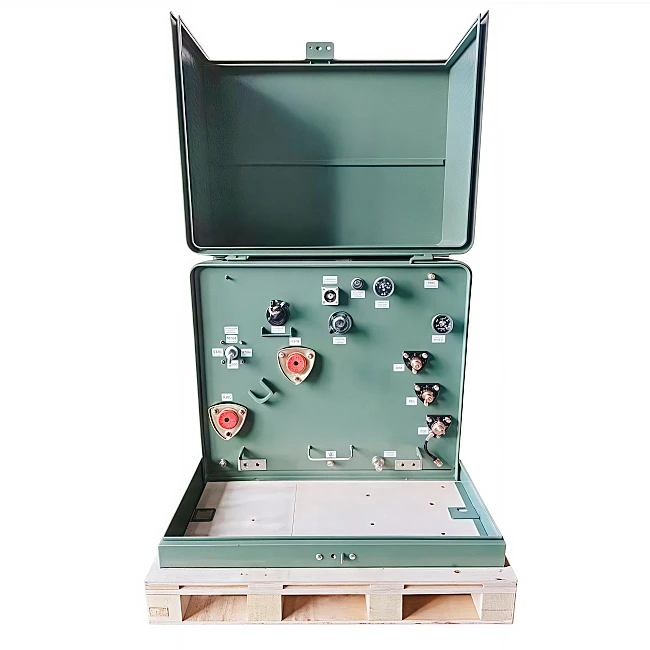

The high - frequency components can extend up to several megahertz or even gigahertz. These high - frequency components are often associated with the electrical arcing and switching transients. High - frequency EMI can be particularly problematic because it can easily couple into other electronic circuits and cause interference.
Amplitude
The amplitude of the EMI depends on several factors, such as the power rating of the transformer, the load conditions, and the quality of the transformer's construction. Generally, larger transformers with higher power ratings tend to generate more EMI. Also, when the transformer is operating under heavy load or when there are electrical problems, the amplitude of the EMI can increase significantly.
Directionality
The EMI from a single - phase pad mount transformer is not uniform in all directions. The magnetic field generated by the core is strongest near the transformer and decreases with distance. The direction of the magnetic field is also related to the orientation of the transformer's windings.
The electrical arcing and switching transients can radiate in all directions, but the strength of the radiation may be affected by the physical layout of the transformer and its surroundings. For example, if the transformer is located near a metal enclosure, the enclosure can act as a shield and reduce the radiation in certain directions.
Mitigating Electromagnetic Interference
As a supplier of Single Phase Pad Mount Transformer, we take several measures to reduce the EMI generated by our transformers.
One of the most common methods is to use shielding. We can use conductive materials, such as copper or aluminum, to enclose the transformer and prevent the magnetic field from radiating outwards. The shield can be connected to the ground to provide a path for the electromagnetic waves to flow harmlessly away.
We also pay close attention to the design and construction of the transformer. Using high - quality insulation materials can reduce the likelihood of electrical arcing. Tightening all the connections and ensuring proper installation can also minimize the generation of EMI.
In addition, we can use filters to suppress the high - frequency components of the EMI. Filters can be installed at the input and output of the transformer to block the unwanted frequencies and allow only the desired power frequencies to pass through.
Importance of Understanding EMI Characteristics
Understanding the EMI characteristics of single - phase pad mount transformers is crucial for several reasons. For end - users, it helps them to choose the right transformer for their specific applications. If they are operating in an environment with a lot of sensitive electronic devices, they need a transformer with low EMI emissions.
For electrical engineers and designers, knowledge of EMI characteristics is essential for proper system design. They need to consider the potential interference from the transformer when laying out power lines, installing electronic equipment, and designing grounding systems.
As a supplier, we need to ensure that our transformers meet the relevant EMI standards. By understanding the characteristics of EMI, we can continuously improve our products and provide better solutions to our customers.
Our Product Offerings
We offer a wide range of Single Phase Pad Mounted Distribution Transformers and Single Phase Pad Mounted Power Transformer. Our transformers are designed with the latest technology to minimize EMI emissions while providing reliable and efficient power distribution.
Whether you need a small transformer for a residential area or a large - scale transformer for an industrial application, we have the right solution for you. Our team of experts can also provide customized solutions based on your specific requirements.
Contact Us for Purchase and Consultation
If you're interested in our single - phase pad mount transformers or have any questions about electromagnetic interference, don't hesitate to get in touch. We're here to help you choose the best transformer for your needs and provide all the technical support you require.
References
- Grover, F. W. (1946). Inductance Calculations: Working Formulas and Tables. Dover Publications.
- Paul, C. R. (2006). Introduction to Electromagnetic Compatibility. Wiley - Interscience.
- National Electrical Manufacturers Association (NEMA). (2019). Standards for Pad - Mounted Transformers.