

As a supplier of Single Phase Pad Mounted Power Transformers, ensuring the reliable operation of these transformers is of utmost importance. Fault detection is a critical aspect of maintaining the performance and safety of these transformers. In this blog, we will explore various fault detection methods for single phase pad mounted power transformers.
Visual Inspection
Visual inspection is the simplest and most direct method of fault detection. Regular visual checks can help identify obvious signs of damage or malfunction. Inspect the exterior of the transformer for any signs of physical damage, such as cracks in the enclosure, leaks, or corrosion. Check the connections for loose or overheated terminals, which can indicate poor electrical contact. Also, look for any signs of abnormal discoloration or charring, which may suggest internal overheating.
Visual inspection can also involve checking the oil level in oil - immersed transformers. A low oil level can lead to inadequate insulation and cooling, increasing the risk of failure. Additionally, inspect the bushings for any signs of cracking, flashover, or carbonization. These visual cues can provide early warnings of potential faults.
Temperature Monitoring
Monitoring the temperature of the transformer is a crucial fault detection method. Overheating is a common cause of transformer failure, and it can be caused by various factors such as overloading, short - circuits, or poor insulation.
Thermocouples or resistance temperature detectors (RTDs) can be installed at critical points in the transformer, such as the windings and the oil. Continuous temperature monitoring allows for the detection of abnormal temperature rises. If the temperature exceeds the normal operating range, it may indicate a fault. For example, a sudden increase in winding temperature could be a sign of a short - circuit in the winding.
Infrared thermography is another effective temperature monitoring technique. An infrared camera can be used to scan the transformer surface and identify hot spots. This non - contact method can quickly detect areas of overheating that may not be visible during a visual inspection.
Oil Analysis
For oil - immersed single phase pad mounted power transformers, oil analysis is a powerful fault detection tool. The oil in a transformer serves as both an insulator and a coolant. Over time, the oil can degrade due to factors such as oxidation, moisture ingress, and the presence of contaminants.
Dissolved gas analysis (DGA) is a widely used oil analysis technique. Different types of faults in the transformer, such as overheating, arcing, or partial discharge, produce specific gases in the oil. By analyzing the concentration and composition of these dissolved gases, it is possible to identify the type and severity of the fault. For example, high levels of methane and ethane may indicate overheating, while acetylene is often associated with arcing.
Oil quality analysis also includes testing for moisture content, acidity, and dielectric strength. High moisture content can reduce the dielectric strength of the oil, increasing the risk of electrical breakdown. Acidity in the oil can indicate oxidation, which can lead to the degradation of the insulation materials.
Electrical Testing
Electrical testing is essential for detecting faults in the electrical components of the transformer.
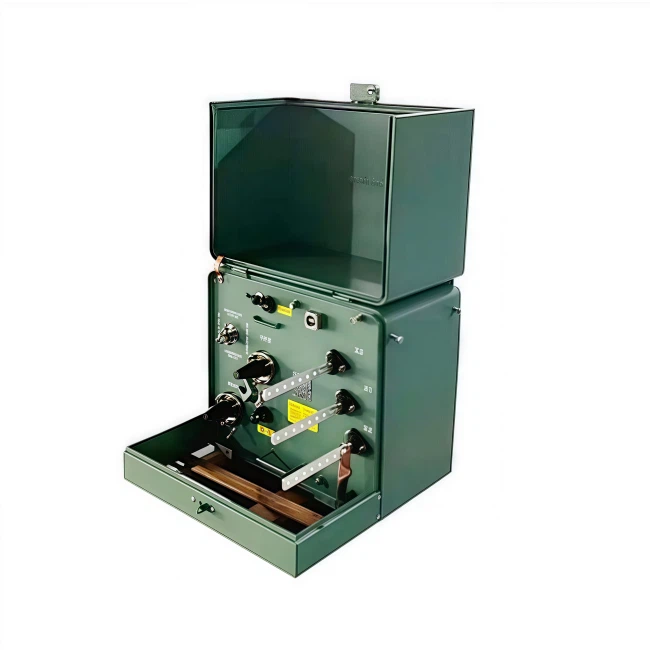

Insulation resistance testing measures the resistance of the insulation between the windings and the ground or between different windings. A low insulation resistance value may indicate moisture ingress, insulation degradation, or a short - circuit.
Turns ratio testing is used to verify the ratio of the number of turns in the primary and secondary windings. A significant deviation from the rated turns ratio can indicate a fault in the winding, such as a short - circuited turn.
Partial discharge testing is another important electrical test. Partial discharges are small electrical discharges that occur within the insulation. These discharges can gradually damage the insulation over time. By detecting and measuring partial discharges, it is possible to identify early signs of insulation deterioration.
Vibration Analysis
Transformers generate mechanical vibrations during normal operation. However, abnormal vibrations can indicate faults such as loose parts, core problems, or unbalanced magnetic forces.
Vibration sensors can be installed on the transformer tank to monitor the vibration levels and frequencies. By analyzing the vibration patterns, it is possible to detect changes that may be associated with a fault. For example, an increase in vibration amplitude at a specific frequency may indicate a loose clamping structure in the transformer.
Online Monitoring Systems
With the advancement of technology, online monitoring systems have become increasingly popular for fault detection in single phase pad mounted power transformers. These systems can continuously collect data from multiple sensors, such as temperature sensors, current sensors, and voltage sensors.
The collected data is then analyzed using advanced algorithms and artificial intelligence techniques. Online monitoring systems can provide real - time information about the transformer's condition, allowing for early fault detection and proactive maintenance. For example, if the system detects a sudden change in the current or voltage, it can immediately alert the maintenance personnel.
Conclusion
In conclusion, a comprehensive approach to fault detection is necessary to ensure the reliable operation of single phase pad mounted power transformers. Visual inspection, temperature monitoring, oil analysis, electrical testing, vibration analysis, and online monitoring systems all play important roles in detecting faults at an early stage.
As a supplier of Link text: Single Phase Pad Mounted Distribution Transformers, we understand the importance of providing high - quality transformers and reliable fault detection solutions. Our Link text: 167 Kva Single Phase Pad Mount Transformer and Link text: Single Phase 75 Kva Pad Mount Transformer are designed with advanced features to facilitate fault detection and maintenance.
If you are interested in our single phase pad mounted power transformers or need more information about fault detection methods, please feel free to contact us for procurement and further discussions. We are committed to providing you with the best products and services to meet your power distribution needs.
References
- "Transformer Maintenance Guide", IEEE Standards Association.
- "Power Transformer Engineering: Design and Application", By John J. McPartland.
- "Electrical Insulation for Rotating Machines: Design, Evaluation, Aging, Testing, and Repair", By G. C. Stone, E. A. Boulter, I. Culbert, and L. S. Salazar.