

Seismic activity, a powerful and unpredictable natural phenomenon, can have far - reaching consequences on various infrastructure components. As a supplier of Dead Front Pad Mounted Transformers, I've witnessed firsthand the impact that seismic events can have on these crucial electrical assets. In this blog, we'll delve into the multiple ways seismic activity affects Dead Front Pad Mounted Transformers and why it's essential to understand these impacts for better planning and maintenance.
Physical Damage to the Transformer Structure
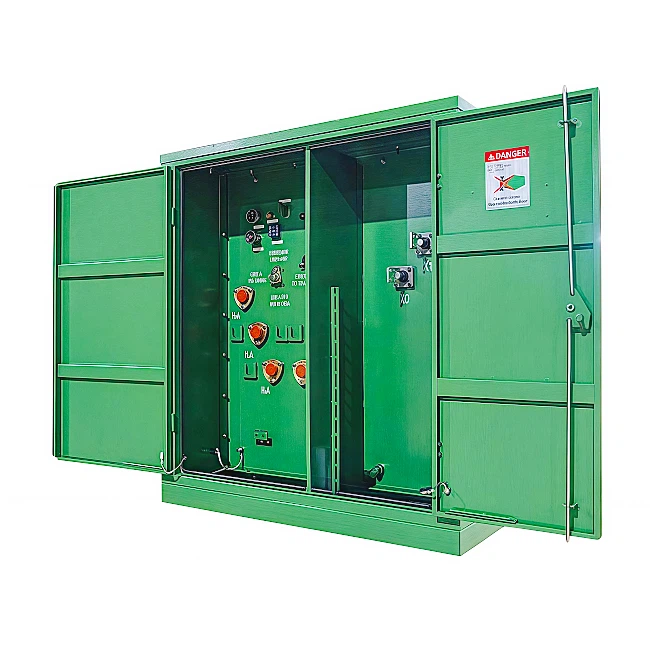
One of the most immediate and visible impacts of seismic activity on a Dead Front Pad Mounted Transformer is physical damage to its structure. During an earthquake, the ground shakes violently, subjecting the transformer to intense forces. The rigid structure of the transformer, which is designed to house and protect its internal components, can crack or deform under these seismic loads.
The transformer's enclosure, typically made of metal or composite materials, may develop fractures. These fractures not only compromise the protective function of the enclosure but also pose a risk of exposing the internal electrical components to the environment. Moisture, dust, and other contaminants can then enter the transformer, which can lead to insulation degradation and potential short - circuits over time.
Moreover, the mounting pads on which the transformers rest can also be affected. Seismic forces can cause the pads to shift, tilt, or even crack. If the mounting pad is damaged, the transformer may become unstable, increasing the likelihood of it toppling over during subsequent seismic events. This instability can lead to severe damage to the transformer and also pose a significant safety hazard to nearby personnel and equipment.
Disruption of Electrical Connections
Seismic activity can also disrupt the electrical connections within the Dead Front Pad Mounted Transformer. The vibrations during an earthquake can cause the electrical terminals, bus bars, and wiring to loosen. Loose connections can result in increased resistance, which in turn generates heat. Excessive heat can damage the insulation around the conductors, leading to insulation breakdown and electrical arcing.
In addition, the mechanical stress from the seismic waves can cause the conductors to break. A broken conductor can interrupt the flow of electricity, leading to power outages in the areas served by the transformer. Restoring these electrical connections can be a time - consuming and costly process, as it often requires specialized equipment and skilled technicians to ensure proper reconnection and insulation.
Impact on Insulation Performance
The insulation system in a Dead Front Pad Mounted Transformer is critical for its safe and efficient operation. Seismic activity can have a detrimental effect on the insulation performance. The mechanical stress from the vibrations can cause micro - cracks in the insulation materials. These micro - cracks can allow moisture and air to penetrate the insulation, reducing its dielectric strength.
Moisture is particularly harmful to the insulation. It can accelerate the aging process of the insulation materials, leading to a decrease in their ability to withstand high voltages. As the insulation performance deteriorates, the risk of electrical breakdown increases, which can result in a complete failure of the transformer.
Oil Leakage
Many Dead Front Pad Mounted Transformers use oil as a coolant and insulation medium. Seismic activity can cause the oil - filled tanks of these transformers to rupture or develop leaks. The vibrations and shocks during an earthquake can damage the tank seals, gaskets, or the tank itself.
Oil leakage is a serious issue for several reasons. Firstly, it reduces the amount of oil available for cooling and insulation, which can lead to overheating of the transformer. Secondly, the leaked oil can contaminate the surrounding environment. Transformer oil often contains hazardous substances, such as polychlorinated biphenyls (PCBs) in older transformers. Leaked oil can pose a risk to soil, water sources, and wildlife.
Impact on Protective Devices
Dead Front Pad Mounted Transformers are equipped with various protective devices, such as fuses, circuit breakers, and relays, to ensure safe operation. Seismic activity can affect the functionality of these protective devices. The vibrations can cause the internal components of these devices to become misaligned or damaged.
For example, a fuse may blow prematurely due to the mechanical stress during an earthquake, even if there is no actual electrical fault in the system. Circuit breakers may fail to trip when a fault occurs because of the misalignment of their internal contacts. This can lead to further damage to the transformer and other electrical equipment in the event of a subsequent fault.
Mitigation Strategies
To minimize the impact of seismic activity on Dead Front Pad Mounted Transformers, several mitigation strategies can be employed. Firstly, proper seismic design and engineering are crucial. Transformers can be designed with flexible connections and shock - absorbing mounts to reduce the transmission of seismic forces. Reinforced enclosures and mounting pads can also be used to enhance the structural integrity of the transformer.
Secondly, regular maintenance and inspection are essential. After a seismic event, a thorough inspection of the transformer should be carried out. This includes checking for physical damage, loose connections, and oil leakage. Any damaged components should be repaired or replaced promptly to prevent further deterioration.
As a supplier of Dead Front Pad Mounted Transformers, we offer a range of high - quality products designed to withstand seismic activity to a certain extent. Our Dead Front Pad Mounted Transformer models are engineered with robust structures and reliable electrical connections. We also provide detailed installation and maintenance guidelines to help our customers ensure the long - term performance of the transformers.
In addition, we also offer 1500 Kva 11kv 22kv 33kv Pad Mount Transformer models, which are suitable for various power distribution applications. These transformers are designed to meet the highest industry standards and can be customized to meet specific seismic requirements.
Our Loop Feed 3 Phase Pad Mount Transformer models are another option for customers looking for reliable power distribution solutions. These transformers are designed with advanced features to ensure stable operation, even in challenging environments.
If you are in the market for Dead Front Pad Mounted Transformers or need more information about how to protect your transformers from seismic activity, we encourage you to contact us for procurement and further discussions. Our team of experts is ready to assist you in selecting the right products and developing appropriate mitigation strategies for your specific needs.

References
- IEEE Std C57.12.28 - 2012, IEEE Standard for Pad - Mounted, Compartmental Type, Self - Cooled, Three - Phase Distribution Transformers, 500 kVA and Smaller; High Voltage, 34 500 GrdY/19 920 Volts and Below; Low Voltage, 15 000 Volts and Below.
- ASCE/SEI 7 - 16, Minimum Design Loads and Associated Criteria for Buildings and Other Structures.
- IEC 60076 - 1:2011, Power transformers - Part 1: General.