

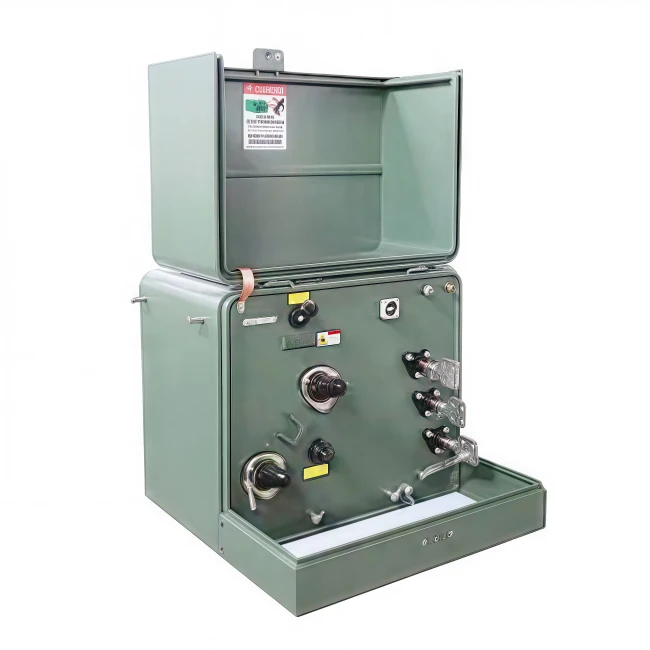
A single phase pad mounted power transformer is a crucial component in electrical distribution systems, commonly used in residential, commercial, and industrial settings. As a supplier of Single Phase Pad Mounted Power Transformer, I understand the importance of having a robust protection system for these transformers. In this blog post, I will delve into the various aspects of the protection system of a single phase pad mounted power transformer.
Overcurrent Protection
Overcurrent is one of the most common issues that can affect a single phase pad mounted power transformer. It can be caused by short - circuits, overloads, or faults in the electrical system. Overcurrent protection devices are designed to detect excessive current flow and isolate the transformer from the power source to prevent damage.
One of the most widely used overcurrent protection devices is the fuse. Fuses are simple and reliable. They consist of a metal wire or strip that melts when the current exceeds a certain value, thereby breaking the circuit. In single phase pad mounted power transformers, high - voltage fuses are often used on the primary side. These fuses are carefully selected based on the transformer's rated current and the expected fault current levels in the system.
Another type of overcurrent protection is the circuit breaker. Circuit breakers can be manually or automatically operated. They can detect overcurrent conditions and trip to open the circuit. Unlike fuses, circuit breakers can be reset after they trip, which makes them more convenient for repeated use. Some modern circuit breakers are equipped with advanced trip units that can provide different levels of protection, such as short - time overcurrent protection and long - time overcurrent protection.
Overvoltage Protection
Overvoltage can occur due to lightning strikes, switching operations in the power grid, or faults in the electrical system. Excessive voltage can cause insulation breakdown in the transformer, leading to short - circuits and other serious problems.
Surge arresters are commonly used for overvoltage protection in single phase pad mounted power transformers. A surge arrester is a device that conducts high - voltage surges to the ground. It has a non - linear resistance characteristic, which means that it has a high resistance under normal operating voltages but a low resistance when a high - voltage surge occurs. This allows the surge arrester to divert the surge current safely to the ground, protecting the transformer from damage.
In addition to surge arresters, some transformers may also be equipped with voltage regulators. Voltage regulators can adjust the output voltage of the transformer to keep it within a safe range. They work by changing the turns ratio of the transformer's windings or by using electronic control circuits to regulate the voltage.

Temperature Protection
The temperature of a single phase pad mounted power transformer is a critical parameter. Excessive temperature can accelerate the aging of the transformer's insulation materials, reduce its efficiency, and even cause a fire.
Thermal sensors are used to monitor the temperature of the transformer. These sensors can be placed in the winding or the oil of the transformer. When the temperature exceeds a pre - set limit, an alarm signal is sent, and in some cases, the transformer may be automatically disconnected from the power source.
Oil - filled transformers also rely on the cooling effect of the oil. The oil circulates through the transformer, absorbing heat from the windings and core, and then transfers the heat to the radiator. If the cooling system fails or the transformer is overloaded, the temperature will rise rapidly. To prevent this, some transformers are equipped with oil pumps and fans to enhance the cooling effect.
Gas Protection
In oil - filled single phase pad mounted power transformers, the presence of gas in the oil can indicate a problem inside the transformer. Gas can be generated due to overheating, arcing, or other faults.
Buchholz relays are commonly used for gas protection. A Buchholz relay is installed in the oil pipe between the transformer tank and the conservator. When a small amount of gas is generated, it accumulates in the upper part of the Buchholz relay, causing a float to rise and trigger an alarm. If a large amount of gas is generated due to a serious fault, the oil flow will be disrupted, and a second float in the Buchholz relay will be activated, which will trip the circuit breaker and disconnect the transformer from the power source.
Moisture Protection
Moisture can have a detrimental effect on the insulation of a single phase pad mounted power transformer. It can reduce the dielectric strength of the insulation materials, increase the risk of electrical breakdown, and promote the growth of mold and bacteria.
Conservators are used in oil - filled transformers to provide a buffer for the expansion and contraction of the oil due to temperature changes. The conservator is connected to the atmosphere through a breather. The breather contains a desiccant, such as silica gel, which absorbs moisture from the air entering the conservator. This helps to keep the oil and the insulation of the transformer dry.
In addition, some transformers are designed with hermetic seals to prevent moisture from entering the transformer tank. Hermetically sealed transformers do not have a conservator and are filled with oil under a slight positive pressure, which further reduces the risk of moisture ingress.
Short - Circuit Protection
Short - circuits are a serious fault that can cause significant damage to a single phase pad mounted power transformer. A short - circuit occurs when there is a low - resistance connection between two conductors in the transformer's windings or between the winding and the ground.
The overcurrent protection devices mentioned earlier, such as fuses and circuit breakers, also play a role in short - circuit protection. They are designed to quickly detect the high - current levels associated with short - circuits and isolate the transformer from the power source.
In addition, the design of the transformer's windings and core also affects its short - circuit withstand capability. The windings are usually made of high - quality copper or aluminum conductors with proper insulation. The core is designed to have a low magnetic reluctance, which helps to reduce the leakage flux and improve the short - circuit performance of the transformer.
Grounding Protection
Proper grounding is essential for the safety and reliable operation of a single phase pad mounted power transformer. Grounding provides a low - resistance path for fault currents to flow to the ground, which helps to protect the transformer and the personnel working around it.
The transformer's tank, neutral point, and other metal parts are all connected to the grounding system. The grounding system usually consists of grounding electrodes, such as ground rods or grounding grids, which are buried in the ground. The resistance of the grounding system should be kept as low as possible to ensure that the fault current can be safely dissipated.
Conclusion
As a supplier of Single Phase Pad Mounted Power Transformer, I know that a comprehensive protection system is crucial for the safe and reliable operation of these transformers. The protection system includes overcurrent protection, overvoltage protection, temperature protection, gas protection, moisture protection, short - circuit protection, and grounding protection. Each of these protection measures plays an important role in ensuring the longevity and performance of the transformer.
If you are in the market for a single phase pad mounted power transformer, such as the 167 Kva Single Phase Pad Mount Transformer or the H Class Insulation Single Phase Pad Transformer, and you want to learn more about the protection systems or have any other questions, please feel free to contact us. We are always ready to assist you in finding the right transformer solution for your needs.
References
- "Electrical Power Transformer Engineering" by Turan Gönen
- "Power System Protection" by J. Lewis Blackburn and Thomas J. Domin