

Profile
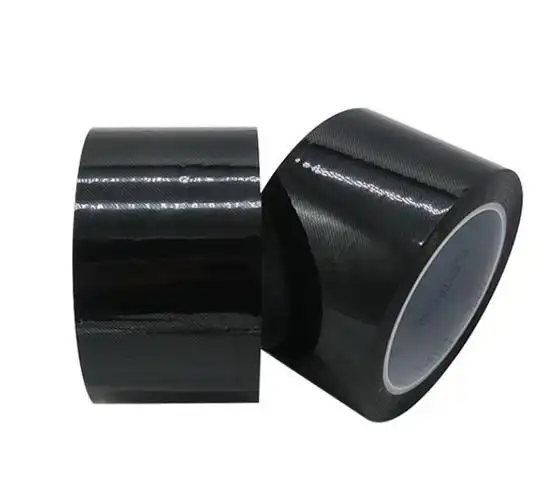
Insulation systems for transformers are rarely a topic of discussion in sales meetings. Attention is usually focused on capacity, impedance, temperature rise, and losses. Within a transformer, insulation tape often goes unnoticed; it binds windings, secures leads, holds inter-layer insulation in place, and protects the edges of conductors-remaining present throughout the entire process of winding, drying, and impregnation. Although it accounts for a very small fraction of the total material cost, it is in direct contact with conductors and leads-and, in oil-immersed units, remains in constant contact with insulating oil. If the tape fails, the entire insulation system fails with it.
Selecting the Right Tape: A Three-Dimensional Decision
Treating all insulating tapes as a single, uniform product category is a recipe for trouble.
A more practical approach is to break the selection process down into three independent dimensions:
heat resistance class, adhesive system, and backing material.

Heat Resistance Class
Transformers are designed based on insulation system classes: Class A (105°C), B (130°C), F (155°C), and H (180°C). Every component within the system must meet the corresponding class requirements. If a Class A tape is used in a Class F dry-type transformer at a location subject to high mechanical stress, that specific point no longer qualifies as part of a Class F system. This is why, for a Class F insulation dry-type power transformer, the requirement for adhesive tape is not merely that it can "withstand 155°C for a short period," but rather that it must maintain its adhesive strength and dielectric integrity at 155°C and above.

Adhesives
These are often the starting point for field failures. Silicone-based adhesives offer excellent heat resistance and are compatible with transformer oil; acrylic-based systems are well-suited for general dry-type applications and Vacuum Pressure Impregnation (VPI) processes; rubber-based adhesives provide good conformability but are prone to softening and migration under sustained thermal loads. Even if the backing material is of high quality, choosing the wrong adhesive renders the entire tape unsuitable.

Regarding backing materials
PET film offers an excellent balance of cost and performance for Class B and many Class F systems, providing good tensile strength and ease of handling during the wrapping process. Glass cloth offers wear resistance and dimensional stability in areas subject to high winding tension or significant edge friction. Crepe paper remains a practical choice for securing leads in oil-immersed distribution equipment. The question is not which backing material is "the best," but rather recognizing that a material performing well in one environment cannot be assumed to perform equally well in another.
Dry-type and Oil-immersed Environments Are Not Interchangeable

Dry-type Transformers
Tapes validated for use in dry-type components are not automatically qualified for direct immersion in oil. In dry-type transformers, tapes are subjected to thermal stress, varnish curing processes, contact with resins, and mechanical vibration-all within an air-based environment. Oil-immersed products, by contrast, involve a continuous liquid dielectric environment. In such settings, tapes must not leach plasticizers, lose their adhesiveness, or alter the breakdown voltage of the oil after years of thermal cycling.
Oil-immersed Transformers
For an oil-immersed, self-cooled transformer, the selection of tapes should begin with data on oil compatibility. Suppliers must verify thermal aging characteristics, dielectric retention after oil immersion, and the stability of the adhesive within the specific chemical composition of the transformer oil. While glass cloth backed with silicone or thermosetting rubber adhesives is a common choice for winding insulation in oil-immersed equipment, "common" does not equate to "validated." Validation is a conclusion drawn from test results, not merely a description of the material.

Looking Outward from the Windings

The same logic applies as we move outward. Compact substations house transformers, switchgear, and control components within a confined space. In such an environment, insulation coordination relies on every roll of tape, every sheet of insulating paper, and every composite material performing to its rated specification under actual thermal and mechanical loads-not just meeting requirements on the day of assembly. The tighter the space, the less room there is for any component that might age faster than the rest of the system.
This is precisely why the selection of insulating tape must ultimately rest with the transformer manufacturer, rather than being left solely to the tape supplier. While a data sheet may provide information on temperature ratings and breakdown voltage, it cannot predict how a specific tape will perform after a decade of thermal cycling within a particular winding structure, subjected to a specific impregnation process, and immersed in a specific insulating oil.


At Jiangsu VKE Transformer Co., Ltd., the selection of insulating materials is an integral part of the transformer design process, rather than a matter of price comparison at the procurement stage. For our dry-type and oil-immersed product platforms-which encompass distribution-class units, pole-mounted and pad-mounted configurations, as well as compact substation assemblies-components such as adhesive tapes, insulating papers, and composite materials are evaluated holistically within a validated insulation system. Material selection is determined by the thermal class and environmental exposure conditions of the end product; compatibility testing is incorporated into the design documentation from the outset, rather than being addressed as an afterthought.

One-stop Transformer Manufacturing Factory in China
If your project involves transformers or compact substations, we invite you to discuss insulating materials with us as a key design variable during the technical specification phase. We warmly welcome both new and existing clients to reach out to us.