

Hey there! As a supplier of three - phase pad - mounted transformers, I often get asked if these transformers can be used in rural power grids. Well, let's dig into this topic and find out.
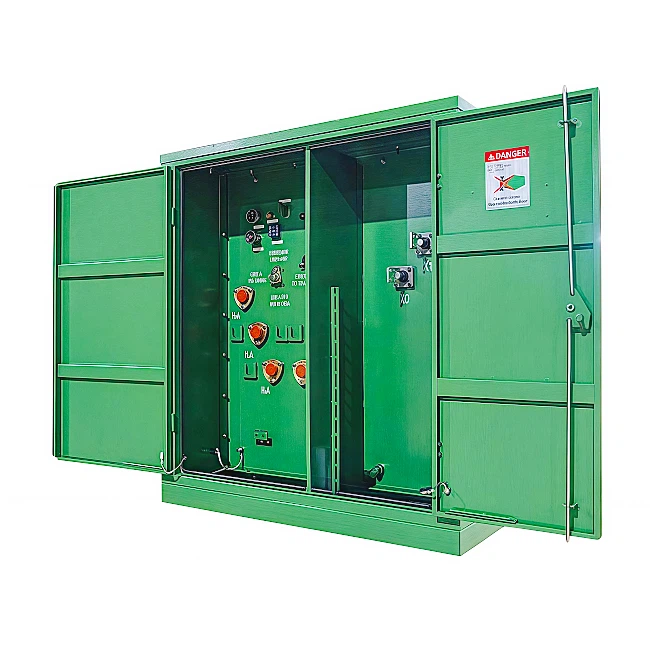
First off, what are three - phase pad - mounted transformers? These bad boys are self - contained units that are usually installed on a concrete pad at ground level. They're designed to step down high - voltage electricity from the power grid to a lower voltage that can be used by homes, businesses, and other facilities. They come in different types, like the Oil Immersed Three Phase Pad Mounted Transformer and the Dead Front Pad Mounted Transformer. And of course, they fall under the category of Pad Mounted Distribution Transformers.
Now, let's talk about rural power grids. Rural areas have their own unique set of challenges when it comes to electricity distribution. The distances between power sources and consumers are often much greater than in urban areas. There are also fewer consumers per square mile, which means the load on the grid is generally lower. Plus, the terrain in rural areas can be more difficult, with mountains, forests, and other natural obstacles.
So, can three - phase pad - mounted transformers work in this kind of environment? The answer is a big yes! Here are some reasons why.
Advantages in Rural Settings
1. Compact Design
Rural areas often have limited space for electrical equipment. Three - phase pad - mounted transformers are relatively compact and can be easily installed on a small concrete pad. This means they don't take up a lot of room, which is great for rural locations where land might be at a premium or where you don't want to disrupt the natural landscape too much.
2. Durability
These transformers are built to last. They're designed to withstand harsh weather conditions, including extreme temperatures, high winds, and heavy rain. In rural areas, the weather can be pretty unpredictable, so having a durable transformer is crucial. Whether it's a blizzard in the winter or a thunderstorm in the summer, a three - phase pad - mounted transformer can handle it.
3. Safety
Safety is always a top priority, especially in areas where people might be living in close proximity to electrical equipment. Three - phase pad - mounted transformers are enclosed in a sturdy cabinet, which helps prevent accidental contact with live parts. This is important in rural areas where there might be children playing nearby or livestock roaming around.
4. Ease of Installation and Maintenance
Installing a three - phase pad - mounted transformer is relatively straightforward. You just need to prepare a concrete pad, connect the electrical cables, and you're good to go. And when it comes to maintenance, these transformers are designed for easy access. Most of the components can be easily reached and serviced without having to shut down the entire system for a long time. This is important in rural areas where power outages can have a big impact on people's lives and businesses.

5. Flexibility
Three - phase pad - mounted transformers can be configured to meet the specific needs of a rural power grid. You can choose different voltage ratings, kVA capacities, and other features depending on the load requirements of the area. This means you can customize the transformer to fit the unique demands of a particular rural community.
Challenges and Solutions
Of course, there are also some challenges when using three - phase pad - mounted transformers in rural power grids.
1. Transportation
Getting the transformers to rural locations can be a challenge. The large size and weight of these units can make transportation difficult, especially in areas with poor road conditions. However, we work with experienced logistics partners who know how to handle these challenges. They use specialized equipment and techniques to ensure that the transformers are transported safely and efficiently.
2. Cost
The initial cost of a three - phase pad - mounted transformer can be relatively high. But when you consider the long - term benefits, such as durability, low maintenance, and reliable performance, it's actually a cost - effective solution. In addition, there are often government incentives and grants available for rural electrification projects, which can help offset the cost.
3. Remote Monitoring
In rural areas, it can be difficult to monitor the performance of the transformers in real - time. However, many of our transformers are equipped with advanced monitoring systems that can transmit data wirelessly. This allows us to keep an eye on the transformer's health, detect any potential problems early, and take corrective action before a major outage occurs.
Real - World Examples
There are many rural areas around the world that have successfully implemented three - phase pad - mounted transformers in their power grids. For example, in some remote farming communities, these transformers have been used to provide reliable electricity for irrigation systems, farm machinery, and homes. The farmers no longer have to worry about power outages disrupting their operations, and the quality of life in these communities has improved significantly.
Conclusion
In conclusion, three - phase pad - mounted transformers are a great option for rural power grids. They offer a number of advantages, including compact design, durability, safety, ease of installation and maintenance, and flexibility. While there are some challenges, such as transportation and cost, these can be overcome with the right strategies and solutions.
If you're involved in a rural electrification project or you're just looking for a reliable power solution for a rural area, I'd love to talk to you. We have a wide range of three - phase pad - mounted transformers to choose from, and our team of experts can help you find the perfect one for your needs. So, don't hesitate to reach out and start the conversation about how we can work together to bring reliable electricity to rural communities.
References
- Electrical Power Distribution Handbook by Terry L. Wildi
- Rural Electrification: Strategies and Technologies by International Renewable Energy Agency