

As a supplier of Oil Immersed Self Cooled Transformers, I often encounter inquiries from customers regarding the overload operation duration of these transformers. This is a crucial concern as it directly impacts the reliability and cost - effectiveness of power distribution systems. In this blog, I'll delve into the factors affecting the overload capacity of Oil Immersed Self Cooled Transformers and attempt to answer the question of how long they can operate under overload.
Understanding Oil Immersed Self Cooled Transformers
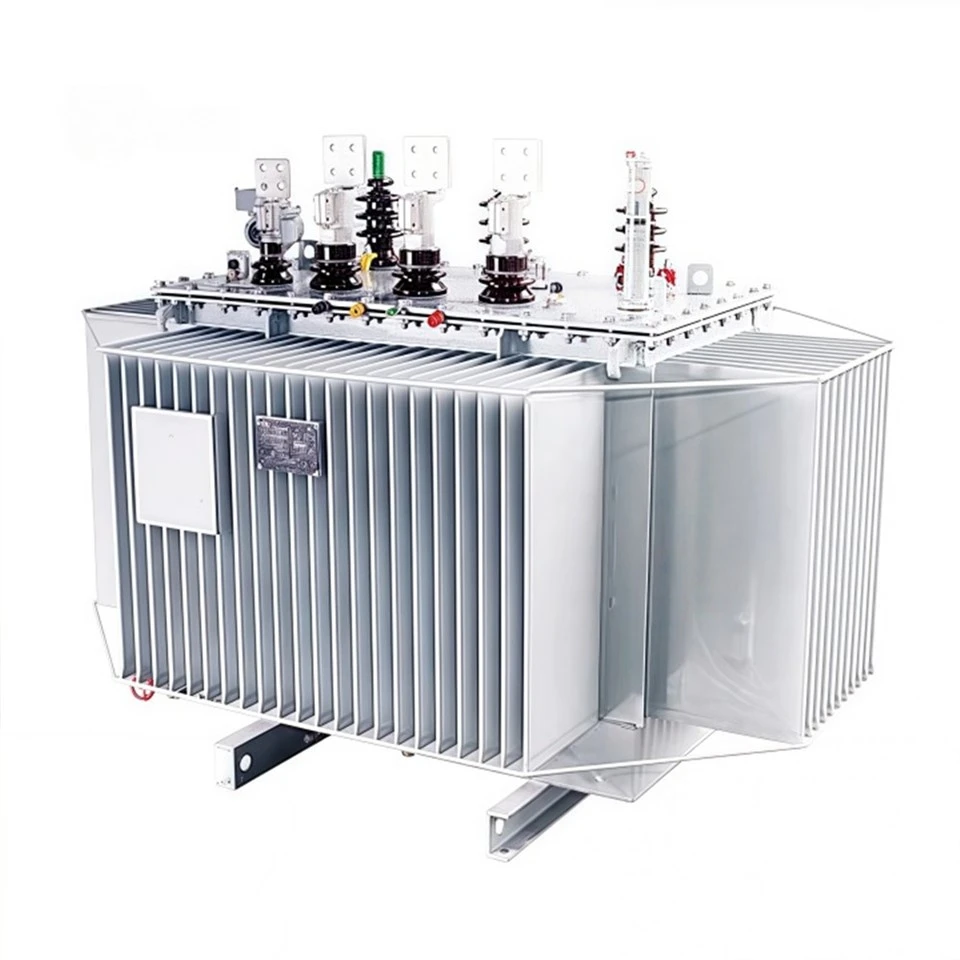
Oil Immersed Self Cooled Transformers are widely used in power distribution networks due to their simplicity, reliability, and cost - efficiency. The cooling mechanism relies on the natural circulation of the insulating oil within the transformer tank. As the oil heats up due to the losses in the windings and core, it rises to the top of the tank and transfers heat to the surrounding air through the radiator or the tank walls.
There are several types of oil - immersed transformers in our product line, such as the Fully Sealed Oil Immersed Distribution Transformer, High Performance Oil Sealed Transformer, and Hermetically Sealed Oil Filled Transformer. These transformers are designed to meet different application requirements, but they all share the basic principle of oil - immersed self - cooling.
Factors Affecting Overload Capacity
Temperature Rise
The most critical factor determining the overload capacity of an Oil Immersed Self Cooled Transformer is the temperature rise. When a transformer operates under overload, the losses in the windings and core increase, leading to a higher temperature rise. Excessive temperature can cause thermal degradation of the insulating materials, reducing their dielectric strength and shortening the transformer's lifespan.
The insulation system of a transformer is classified according to its thermal endurance. For example, Class A insulation can withstand a maximum temperature of 105°C, while Class F insulation can tolerate up to 155°C. The temperature rise of the transformer is limited by the allowable temperature of the insulation system. When the temperature exceeds the limit, the aging rate of the insulation accelerates exponentially.
Ambient Temperature
The ambient temperature also plays a significant role in the overload operation of the transformer. In a hot environment, the cooling efficiency of the transformer is reduced because the temperature difference between the transformer and the surrounding air is smaller. As a result, the transformer can carry less overload compared to a cooler environment.
For instance, if the ambient temperature is 40°C, the transformer may be able to tolerate a certain level of overload for a specific period. However, if the ambient temperature rises to 50°C, the same overload may cause the transformer temperature to exceed the allowable limit more quickly.
Load Profile
The nature of the load also affects the overload capacity. A transformer can handle a short - term overload better than a long - term one. If the overload is of a short - duration and intermittent nature, the transformer has time to cool down between overload periods. On the other hand, a continuous overload will cause the temperature to keep rising, increasing the risk of insulation damage.
Calculating the Overload Duration
To estimate how long an Oil Immersed Self Cooled Transformer can operate under overload, we can use the thermal model of the transformer. The thermal model takes into account the heat generation, heat transfer, and thermal capacity of the transformer.
The heat generation in the transformer is mainly due to the copper losses in the windings and the iron losses in the core. The copper losses are proportional to the square of the current, while the iron losses are relatively constant under normal operating conditions. The heat transfer occurs through conduction, convection, and radiation.
The thermal capacity of the transformer is determined by the mass and specific heat of the materials, mainly the oil and the core. A transformer with a larger thermal capacity can store more heat energy, allowing it to withstand a higher overload for a longer time.
In general, for a short - term overload (less than 1 hour), an Oil Immersed Self Cooled Transformer can typically handle an overload of up to 150% of its rated capacity, depending on the initial temperature and the ambient conditions. For a longer - term overload (1 - 8 hours), the overload capacity may be reduced to 120% - 130% of the rated capacity.
However, these are just rough estimates. To accurately determine the overload duration, a detailed analysis of the transformer's design parameters, load profile, and ambient conditions is required.
Case Studies
Let's consider a real - world example. A customer in an industrial area has an Oil Immersed Self Cooled Transformer with a rated capacity of 1000 kVA. Due to a sudden increase in production, the load on the transformer reaches 1200 kVA (120% of the rated capacity). The ambient temperature is 35°C, and the initial temperature of the transformer is 60°C.
Based on our calculations and experience, this transformer can operate at 120% overload for about 4 - 6 hours without significant damage to the insulation. After the overload period, the transformer should be monitored closely to ensure that the temperature returns to normal.

Ensuring Safe Overload Operation
To ensure the safe operation of the transformer under overload, several measures can be taken:
- Monitoring: Install temperature sensors in the transformer to monitor the temperature of the windings and the oil. This allows for real - time monitoring of the transformer's thermal condition and early detection of any abnormal temperature rise.
- Load Management: Implement load management strategies to reduce the peak load on the transformer. This can include scheduling non - essential equipment to operate during off - peak hours or using energy storage systems to balance the load.
- Maintenance: Regularly maintain the transformer to ensure its cooling system is working efficiently. This includes checking the oil level, inspecting the radiators, and cleaning the tank walls.
Conclusion
In conclusion, the duration that an Oil Immersed Self Cooled Transformer can operate under overload depends on multiple factors, including temperature rise, ambient temperature, and load profile. While rough estimates can be made, a detailed analysis is necessary for accurate determination.
As a supplier of Oil Immersed Self Cooled Transformers, we are committed to providing high - quality products and technical support to our customers. If you have any questions regarding the overload operation of our transformers or need assistance in selecting the right transformer for your application, please feel free to contact us for procurement and further discussions.
References
- IEEE Standard C57.91 - 2011, “Loading Guide for Oil - Immersed Power Transformers”.
- IEC 60076 - 7:2018, “Power transformers - Part 7: Loading guide for oil - immersed power transformers”.