

Hey there! As a supplier of Pad Mounted Distribution Transformers, I've seen firsthand how crucial preventive maintenance is for these electrical workhorses. In this blog, I'll share some practical tips on how to perform preventive maintenance on Pad Mounted Distribution Transformers.
Why Preventive Maintenance Matters
First off, let's talk about why preventive maintenance is so important. Pad Mounted Distribution Transformers are designed to step down high-voltage electricity from the power grid to a lower voltage that can be used by homes and businesses. They're often located outdoors, exposed to the elements, and are subject to a lot of wear and tear. Without proper maintenance, these transformers can develop problems that can lead to costly repairs, power outages, and even safety hazards.
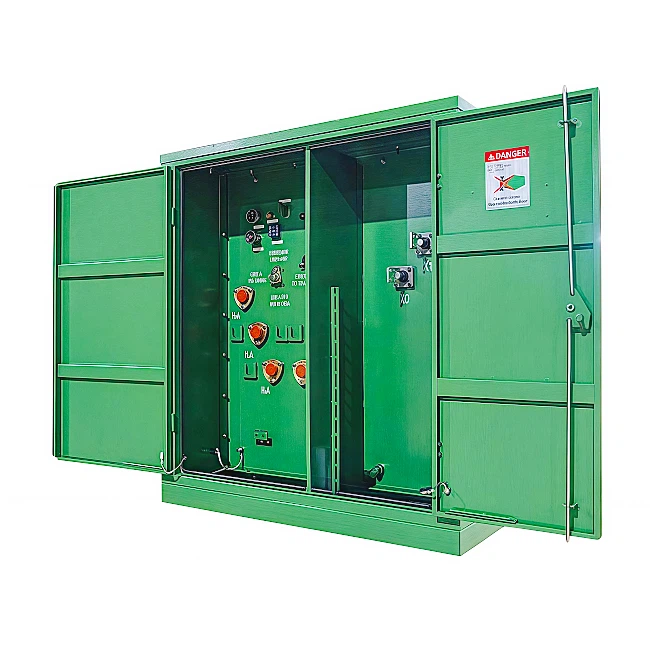

By performing regular preventive maintenance, you can catch small problems before they turn into big ones. This not only helps to extend the lifespan of your transformers but also ensures that they operate safely and efficiently. It can also save you money in the long run by reducing the need for emergency repairs and replacements.
Visual Inspections
One of the simplest and most effective ways to perform preventive maintenance on Pad Mounted Distribution Transformers is to conduct regular visual inspections. These inspections should be done at least once a year, but more frequent inspections may be necessary in areas with harsh environmental conditions or high levels of electrical activity.
During a visual inspection, you should look for signs of damage, wear, or corrosion on the transformer's exterior. Check the enclosure for any cracks, dents, or signs of water intrusion. Look for loose or damaged connections, as well as any signs of overheating, such as discoloration or melting. Inspect the cooling fins and vents to make sure they're clean and free of debris.
You should also check the transformer's oil level and condition. Most Pad Mounted Distribution Transformers use oil as a coolant and insulator. Over time, the oil can break down and become contaminated, which can reduce the transformer's efficiency and lifespan. Check the oil level using the sight glass or dipstick, and look for any signs of discoloration, cloudiness, or sediment. If the oil level is low or the oil looks dirty, it may need to be changed.
Electrical Testing
In addition to visual inspections, it's also important to perform regular electrical testing on Pad Mounted Distribution Transformers. These tests can help to detect any electrical problems or abnormalities that may not be visible during a visual inspection.
One of the most common electrical tests is a winding resistance test. This test measures the resistance of the transformer's windings to determine if there are any shorts or open circuits. A high resistance reading may indicate a problem with the winding, such as a broken wire or a short circuit.
Another important electrical test is a turns ratio test. This test measures the ratio of the number of turns in the primary winding to the number of turns in the secondary winding. A change in the turns ratio may indicate a problem with the transformer's core or windings.
You should also perform a dielectric strength test on the transformer's oil. This test measures the ability of the oil to withstand electrical stress without breaking down. A low dielectric strength reading may indicate that the oil is contaminated or has broken down and needs to be changed.
Temperature Monitoring
Temperature is another important factor to consider when performing preventive maintenance on Pad Mounted Distribution Transformers. Overheating can cause the transformer's insulation to break down, which can lead to short circuits and other electrical problems.
To monitor the temperature of the transformer, you can use a temperature sensor or a thermal imaging camera. These tools can help you to detect any hot spots or areas of overheating on the transformer's exterior. If you notice any areas of overheating, you should investigate the cause and take appropriate action to correct the problem.
Lubrication and Greasing
Many Pad Mounted Distribution Transformers have moving parts, such as fans, pumps, and switches. These parts need to be lubricated and greased regularly to ensure smooth operation and prevent wear and tear.
Check the manufacturer's recommendations for the type and frequency of lubrication and greasing. Use a high-quality lubricant or grease that is suitable for the specific application. Apply the lubricant or grease to the moving parts according to the manufacturer's instructions.
Record Keeping
Finally, it's important to keep detailed records of all preventive maintenance activities. These records can help you to track the maintenance history of the transformer, identify any recurring problems, and plan for future maintenance and repairs.
Keep a log of all visual inspections, electrical tests, temperature monitoring, lubrication and greasing, and any other maintenance activities. Include the date, time, location, and results of each activity, as well as any recommendations or actions taken.
Conclusion
Performing preventive maintenance on Pad Mounted Distribution Transformers is essential for ensuring their safe and efficient operation. By conducting regular visual inspections, electrical testing, temperature monitoring, lubrication and greasing, and keeping detailed records, you can catch small problems before they turn into big ones and extend the lifespan of your transformers.
If you're in the market for Pad Mounted Distribution Transformers or need help with preventive maintenance, please don't hesitate to contact us. We're a leading supplier of Pad Mounted Distribution Transformers, Fully Sealed Three Phase Pad Mounted Transformer, and Dead Front Pad Mounted Transformer. Our team of experts can help you choose the right transformer for your needs and provide you with the support and service you need to keep it running smoothly.
References
- IEEE Standard for Pad-Mounted, Compartmental-Type, Self-Cooled, Three-Phase Distribution Transformers, 500 kVA and Smaller: High-Voltage, 34 500 GrdY/19 920 Volts and Below; Low-Voltage, 240/120 Volts
- ANSI/IEEE C57.12.28-2012, Standard for Pad-Mounted, Compartmental-Type, Self-Cooled, Three-Phase Distribution Transformers, 500 kVA and Smaller: High-Voltage, 34 500 GrdY/19 920 Volts and Below; Low-Voltage, 240/120 Volts
- NEMA ST 20-2010, Standard for Pad-Mounted, Compartmental-Type, Self-Cooled, Three-Phase Distribution Transformers, 500 kVA and Smaller: High-Voltage, 34 500 GrdY/19 920 Volts and Below; Low-Voltage, 240/120 Volts