

Hey there! As a supplier of Ring Main Three Phase Pad Mounted Transformers, I've been getting a lot of questions lately about fault-detection algorithms for these bad boys. So, I thought I'd put together this blog post to give you the lowdown on what's out there and how it can keep your transformers running smoothly.
First off, let's talk about why fault detection is so important. Ring Main Three Phase Pad Mounted Transformers are a crucial part of the electrical distribution system. They step down high-voltage electricity to a level that's safe and usable for homes and businesses. If a fault occurs in one of these transformers, it can lead to power outages, equipment damage, and even safety hazards. That's where fault-detection algorithms come in. They help us identify potential problems before they turn into major disasters.
One of the most common fault-detection algorithms is the overcurrent protection algorithm. This algorithm monitors the current flowing through the transformer and compares it to a pre-set threshold. If the current exceeds this threshold, it's a sign that there might be a fault in the system. The algorithm can then trigger a protective device, like a circuit breaker, to isolate the faulty section and prevent further damage.
Another important algorithm is the overvoltage protection algorithm. Similar to the overcurrent algorithm, this one monitors the voltage across the transformer. If the voltage goes above a certain level, it can cause insulation breakdown and other problems. The overvoltage algorithm can detect these spikes and take action to protect the transformer.
Temperature monitoring is also a key part of fault detection. Transformers generate heat as they operate, and if the temperature gets too high, it can damage the insulation and other components. There are several algorithms that can monitor the temperature of the transformer, including the hot-spot temperature algorithm. This algorithm calculates the temperature at the hottest point in the transformer and compares it to a safe operating range. If the temperature exceeds this range, it can indicate a problem, such as overloading or a cooling system failure.
Dissolved gas analysis (DGA) is another powerful fault-detection technique. When a fault occurs in a transformer, it can cause the insulation materials to break down and release gases. By analyzing the types and amounts of these gases, we can get a good idea of what kind of fault is occurring. There are several algorithms that can analyze DGA data, such as the Duval Triangle method. This method uses a graphical representation to classify the faults based on the ratios of different gases.
Now, let's talk about some of the more advanced fault-detection algorithms. Artificial intelligence (AI) and machine learning (ML) are becoming increasingly popular in the field of transformer fault detection. These algorithms can analyze large amounts of data from multiple sensors and identify patterns that might not be obvious to human operators. For example, an AI algorithm can learn the normal operating behavior of a transformer and then detect any deviations from this pattern. This can help us detect faults earlier and with greater accuracy.
One of the advantages of using AI and ML algorithms is that they can adapt to changing conditions. As the transformer ages or the operating environment changes, the algorithms can adjust their parameters to continue providing accurate fault detection. This is especially important in today's dynamic electrical grid, where the load on transformers can vary widely.
So, how do these algorithms work in real-world applications? Well, at our company, we integrate these fault-detection algorithms into our Ring Main Three Phase Pad Mounted Transformers. We use advanced sensors and monitoring systems to collect data from the transformers and feed it into our algorithms. The algorithms then analyze the data in real-time and provide us with alerts if there are any potential problems.

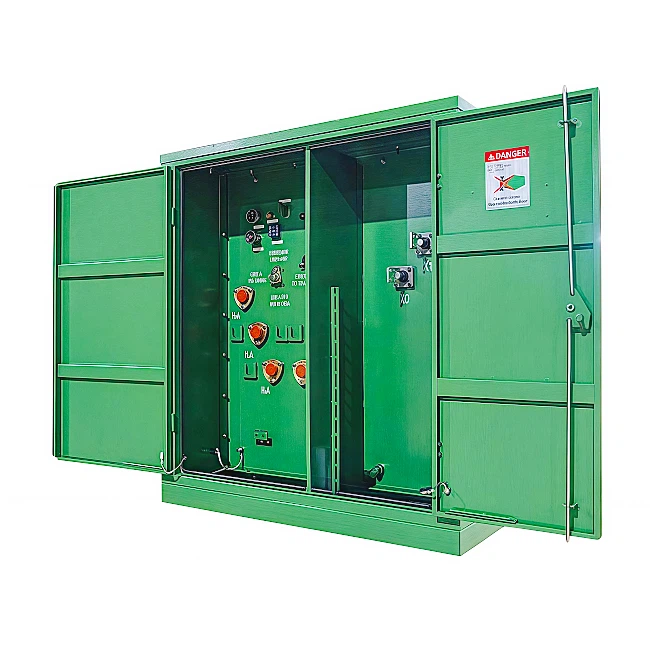
This proactive approach to fault detection has several benefits. For our customers, it means less downtime and lower maintenance costs. By detecting faults early, we can often fix them before they cause a major outage. This helps to keep the power flowing and minimize the impact on businesses and households.
If you're in the market for a Ring Main Three Phase Pad Mounted Transformer, I encourage you to check out our products. We offer a wide range of options, including Pad Mounted Distribution Transformers, H Class Insulation Three Phase Pad Transformer, and Dead Front Pad Mounted Transformer. Our transformers are designed with the latest fault-detection algorithms to ensure reliable and safe operation.
If you have any questions or would like to discuss your specific requirements, don't hesitate to reach out. We're always happy to help you find the right transformer for your needs and provide you with the best possible service. Whether you're a utility company, an industrial customer, or a commercial business, we have the expertise and products to meet your electrical distribution needs.
In conclusion, fault-detection algorithms are an essential part of ensuring the reliability and safety of Ring Main Three Phase Pad Mounted Transformers. From basic overcurrent and overvoltage protection to advanced AI and ML algorithms, there are many tools at our disposal to detect and prevent faults. By using these algorithms, we can keep the power flowing and minimize the impact of electrical failures. So, if you're looking for a high-quality transformer with top-notch fault-detection capabilities, give us a call and let's start the conversation.
References
- Blackburn, J. L. (2014). Protective Relaying: Principles and Applications. CRC Press.
- Arrillaga, J., & Watson, N. R. (2003). Power System Protection. Wiley.
- Ekanayake, J. B., & Jenkins, N. (2004). Distributed Generation: Technologies, Modeling, and Impact on the Grid. Wiley.