

Manufacturing defects in a Dead Front Pad Mounted Transformer can have far - reaching and significant impacts on various aspects, from safety and performance to operational costs and the overall reputation of the supplier. As a supplier of Dead Front Pad Mounted Transformers, understanding these impacts is crucial for ensuring high - quality products and maintaining customer satisfaction.
1. Safety Risks
One of the most critical impacts of manufacturing defects in a Dead Front Pad Mounted Transformer is the potential safety hazards they pose. Dead Front Pad Mounted Transformers are designed to provide a safe and reliable source of power distribution. However, defects such as improper insulation can lead to electrical arcing. Electrical arcing is a dangerous phenomenon where an electric current jumps through the air between conductors. This can cause fires, which not only damage the transformer itself but also pose a threat to nearby equipment, buildings, and personnel.
For instance, if the insulation material is of poor quality or has been damaged during the manufacturing process, it may not be able to withstand the electrical stress. As a result, the electrical current can break through the insulation, creating an arc. This arc can generate extremely high temperatures, which can ignite surrounding combustible materials.
Another safety concern is related to the enclosure of the transformer. A defect in the enclosure, such as a poorly sealed door or a crack in the housing, can allow moisture and foreign objects to enter. Moisture can cause corrosion of internal components, which can lead to short - circuits. Foreign objects, on the other hand, can interfere with the normal operation of the transformer and may also cause electrical faults.
2. Performance Degradation
Manufacturing defects can also have a significant impact on the performance of a Dead Front Pad Mounted Transformer. Transformers are designed to efficiently transfer electrical energy from one circuit to another with minimal losses. However, defects can disrupt this process.
For example, a defect in the winding of the transformer can cause an imbalance in the magnetic field. The winding is a crucial part of the transformer, as it is responsible for creating the magnetic field that transfers the electrical energy. If the winding is not wound correctly or has a short - circuit within it, the magnetic field will be distorted. This can lead to increased losses in the form of heat, which reduces the overall efficiency of the transformer.
In addition, a defect in the core of the transformer can also affect its performance. The core is made of a magnetic material that helps to concentrate the magnetic field. If the core has a defect, such as a crack or a misaligned lamination, it can increase the magnetic reluctance. This means that more energy is required to create the same magnetic field, resulting in lower efficiency and higher operating costs.
3. Operational Costs
The performance degradation caused by manufacturing defects directly translates into increased operational costs. As mentioned earlier, a defective transformer will have higher losses in the form of heat. This means that more electrical energy is wasted, which leads to higher electricity bills for the end - user.
Moreover, a transformer with manufacturing defects is more likely to experience breakdowns. When a transformer breaks down, it needs to be repaired or replaced. The cost of repair can be substantial, especially if the defect is difficult to diagnose or if the replacement parts are expensive. In addition, there is also the cost of downtime. During the repair or replacement process, the power supply may be interrupted, which can cause losses for businesses that rely on a continuous power supply.
For example, a manufacturing plant that experiences a power outage due to a defective transformer may have to stop its production line. This can result in lost production, missed deadlines, and potential damage to the company's reputation.
4. Reputation of the Supplier
As a supplier of Dead Front Pad Mounted Transformers, the reputation is at stake when manufacturing defects occur. Customers expect high - quality products that are safe and reliable. If a transformer supplied by our company has manufacturing defects, it can damage our reputation in the market.
Customers may lose trust in our products and may be reluctant to do business with us in the future. Word - of - mouth is a powerful marketing tool, and negative reviews about our defective transformers can spread quickly. This can lead to a decrease in sales and a loss of market share.
On the other hand, by ensuring high - quality manufacturing processes and minimizing the occurrence of defects, we can build a positive reputation. Customers will be more likely to recommend our products to others, which can lead to increased sales and a stronger market position.
5. Regulatory Compliance
Manufacturing defects can also lead to non - compliance with regulatory standards. Dead Front Pad Mounted Transformers are subject to various safety and performance regulations. These regulations are in place to ensure the safety of the public and the proper functioning of the electrical grid.
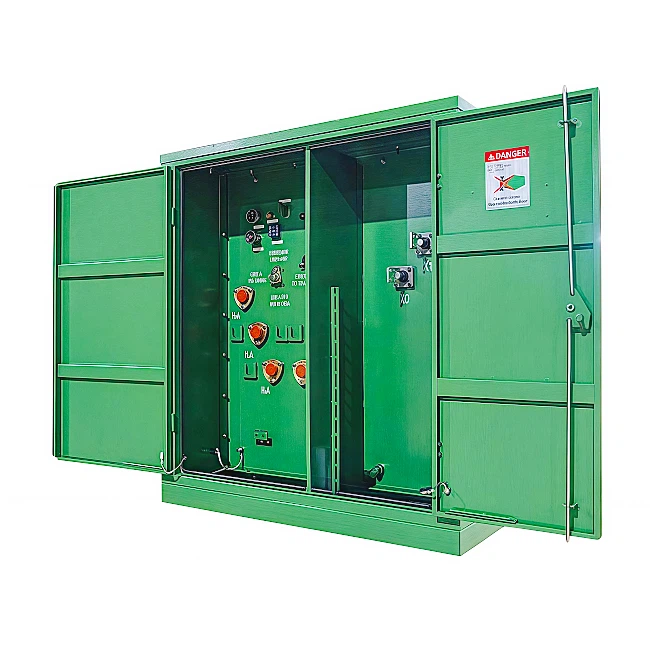

If a transformer has manufacturing defects that cause it to fail to meet these regulatory standards, it can result in legal issues for the supplier. The supplier may be fined or may be required to recall the defective transformers. This can be a costly and time - consuming process, which can also damage the reputation of the company.
Mitigation Strategies
As a supplier, we have several strategies to mitigate the impacts of manufacturing defects. First, we need to implement strict quality control measures during the manufacturing process. This includes inspecting raw materials, monitoring the manufacturing process at every stage, and conducting thorough testing before the transformers are shipped.
Second, we should invest in research and development to improve the design and manufacturing techniques of our Dead Front Pad Mounted Transformers. By using better materials and more advanced manufacturing processes, we can reduce the likelihood of defects.
Finally, we need to provide excellent after - sales service. In case a customer discovers a manufacturing defect, we should respond quickly and provide a solution, whether it is a repair or a replacement. This can help to minimize the impact on the customer and protect our reputation.
If you are interested in our Dead Front Pad Mounted Transformer, Three - phase Pad - mounted Transformers or 1500 Kva 11kv 22kv 33kv Pad Mount Transformer, please feel free to contact us for more information and to discuss your procurement needs. We are committed to providing high - quality products and excellent service.
References
- "Electrical Power Transformers: Theory and Design" by A. K. Sawhney
- "Transformer Engineering: Design, Technology, and Diagnostics" by George Karady and G. J. Anders