

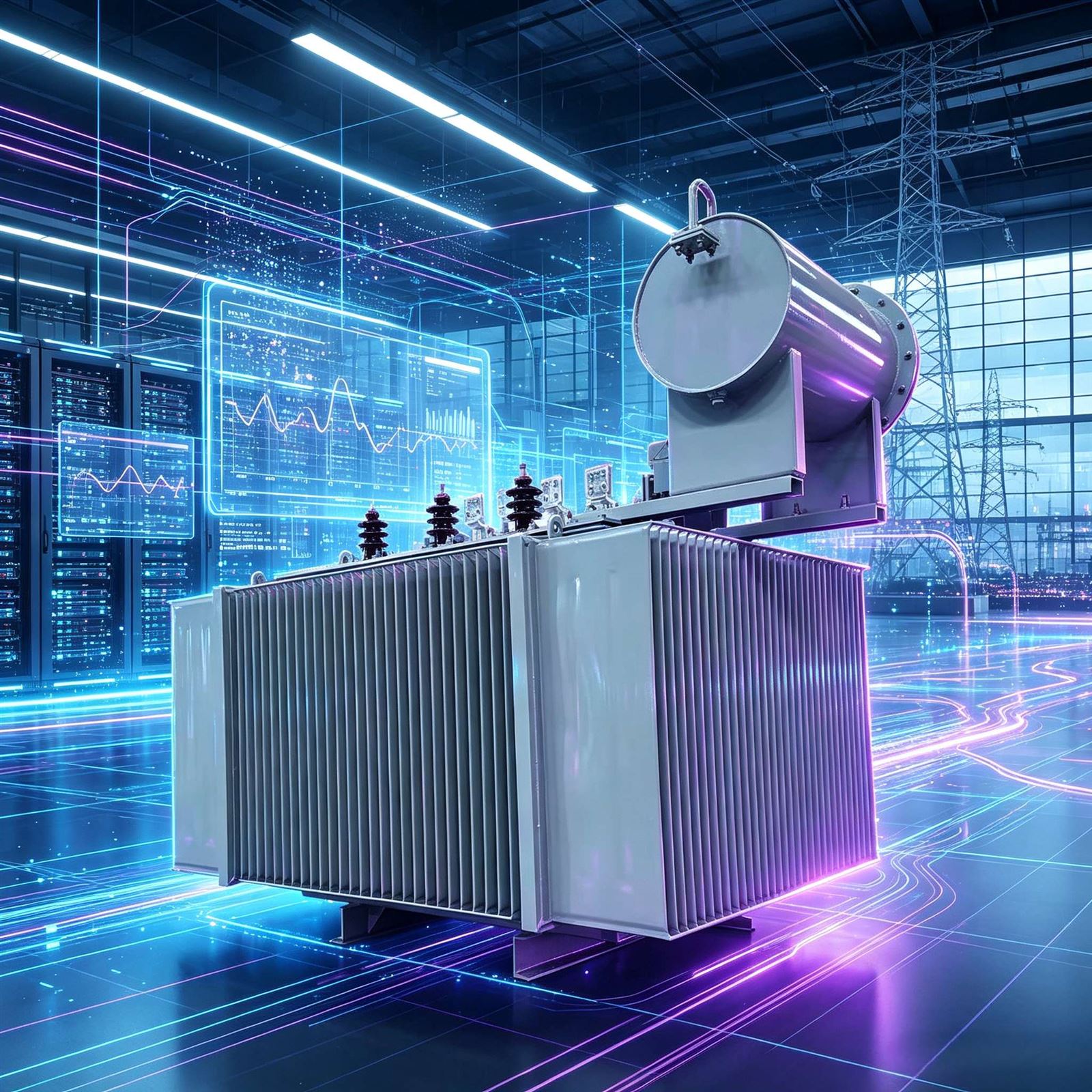
The Hidden Tricks in Transformers
When buying a transformer, many people look only at capacity and price. However, what truly determines how much electricity a transformer "consumes" itself are two figures on the nameplate that most people don't understand: "no-load loss" and "load loss." These two numbers conceal some of the deepest, murkiest practices in the transformer industry.
What Exactly Are Transformer Losses?
During operation, a transformer "consumes" a portion of the electricity passing through it;
this consumed energy is known as "loss" .

No-load loss
As long as a transformer is energized-even if no electricity is being drawn by the load-it continues to consume power. This loss originates in the iron core, caused by eddy currents and magnetic hysteresis-phenomena that generate heat as the core is repeatedly magnetized within an alternating magnetic field.
load loss
This stems from the electrical resistance of the windings (coils) and magnetic flux leakage. The higher the electrical load, the greater this loss becomes; it is directly proportional to the square of the current. It acts as a "variable expense" that fluctuates based on your actual power consumption.

How Do Some Manufacturers "Cheat" on Losses?
In addition to the regular products that we already produce.
Using "recycled sheets" for the iron core
These are silicon steel sheets salvaged from discarded transformers, then trimmed and restacked. Sourcing such reclaimed material costs only about a quarter of what new silicon steel strips would cost. Cores built this way suffer from significantly higher no-load losses.
The substitution of aluminum for copper
Copper offers superior conductivity and lower resistance, resulting in lower load losses. Aluminum is much cheaper, but its resistivity is about 60% higher than copper's; for the same cross-sectional area, this leads to a substantial increase in load losses.
Downsizing the core
Using a core with a smaller cross-sectional area or a lower stacking factor. While the overall dimensions may appear similar, the effective cross-sectional area of the core is insufficient, causing no-load losses to exceed specified limits.
Why do some people dare to "skimp" on efficiency?

Because energy loss isn't written on the device's exterior.
If a transformer lacks sufficient capacity to handle a load, the user will notice immediately. If it overheats-becoming hot to the touch-that, too, is easily detected. However, excessive energy loss offers no obvious, immediate signs-only a higher electricity bill. A transformer with 30% higher no-load loss than permitted can look, sound, and heat up exactly the same as a compliant unit.
Furthermore, energy efficiency standards are tiered; the national standard GB 20052-2024 classifies transformer efficiency into Levels 1, 2, and 3. Many tender requirements simply state "must meet Level 2 efficiency," but there is often "wiggle room" between merely "meeting" the standard and actually hitting the specific Level 2 limit. Some manufacturers design their transformers with loss levels that barely scrape into the Level 3 category, while describing them in reports as "approaching Level 2." If the user doesn't scrutinize the details, these units can easily pass as compliant.
How can you tell if a transformer has "skimped" on efficiency?



When it comes to energy loss, we absolutely refuse to cut corners!
Established in 2003, Jiangsu VKE Transformer Co., Ltd. offers a product portfolio that includes oil-immersed transformers, dry-type transformers, amorphous alloy transformers, and box-type substations.
Our stance on energy loss is straightforward: no skimping on quality, no reducing essential materials, and no deception.