

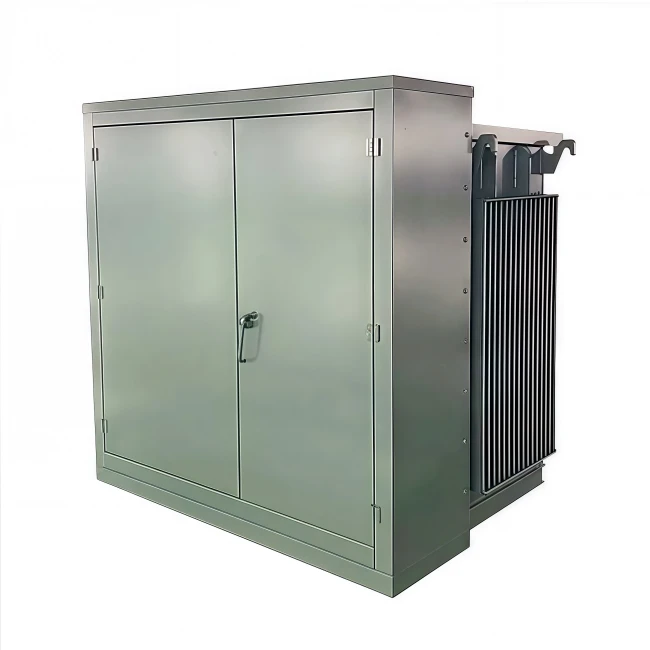
A dead front pad mounted transformer is a crucial component in electrical distribution systems, offering numerous benefits in terms of safety, reliability, and efficiency. As a supplier of these transformers, I have witnessed firsthand the importance of understanding their electrical characteristics. In this blog post, I will delve into the key electrical characteristics of a dead front pad mounted transformer, providing insights that are essential for anyone involved in the electrical industry.
Voltage Ratings
One of the primary electrical characteristics of a dead front pad mounted transformer is its voltage ratings. These transformers are designed to step down high voltage from the primary side to a lower voltage on the secondary side, which is suitable for distribution to end - users. The primary voltage rating can vary widely, typically ranging from medium - voltage levels such as 4.16 kV, 12.47 kV, 13.8 kV, up to higher levels depending on the specific application and the power grid requirements.
The secondary voltage rating is usually a standard low - voltage level, such as 120/240 V for single - phase or 208Y/120 V, 480Y/277 V for three - phase systems. These standard voltage levels are commonly used in residential, commercial, and industrial settings. For instance, in a residential area, the 120/240 V secondary voltage is used to power household appliances and lighting.
When selecting a dead front pad mounted transformer, it is crucial to ensure that the voltage ratings match the requirements of the electrical system. Incorrect voltage ratings can lead to equipment damage, inefficient operation, and safety hazards. As a supplier, we offer a wide range of voltage ratings to meet the diverse needs of our customers. You can explore our Three - phase Pad - mounted Transformers for detailed information on the available voltage options.
Power Rating
The power rating of a dead front pad mounted transformer is another critical electrical characteristic. It is typically measured in kilovolt - amperes (kVA) and represents the amount of electrical power that the transformer can handle. Power ratings can range from a few kVA for small - scale applications, such as a single - family home or a small business, to several thousand kVA for large industrial complexes or commercial buildings.
A higher power rating means that the transformer can supply more electrical energy to the connected loads. When sizing a transformer, it is essential to consider the total load requirements of the system, including both the present and future loads. Overloading a transformer can cause overheating, which can reduce its lifespan and increase the risk of failure. On the other hand, an oversized transformer can be inefficient and costly.
As a supplier, we can assist our customers in accurately determining the appropriate power rating for their specific applications. Our Pad Mounted Distribution Transformers come in a variety of power ratings, ensuring that we can meet the power needs of different projects.
Impedance
Impedance is an important electrical characteristic that affects the performance of a dead front pad mounted transformer. It is a measure of the opposition to the flow of alternating current (AC) in the transformer. The impedance of a transformer is expressed as a percentage and is typically in the range of 3% - 10%.
A lower impedance transformer allows for a higher short - circuit current to flow in the event of a fault. This can be beneficial in some cases, as it can help protective devices, such as circuit breakers, to operate more quickly and isolate the fault. However, a very low impedance can also cause excessive short - circuit currents, which can damage the transformer and other electrical equipment.
On the other hand, a higher impedance transformer limits the short - circuit current, reducing the stress on the electrical system during a fault. But it may also cause a larger voltage drop under normal operating conditions, which can affect the performance of the connected loads. When selecting a transformer, the impedance value should be carefully considered based on the specific requirements of the electrical system.
Efficiency
Efficiency is a key consideration when it comes to the electrical characteristics of a dead front pad mounted transformer. It is defined as the ratio of the output power to the input power, expressed as a percentage. A highly efficient transformer converts a larger proportion of the input electrical energy into useful output energy, with less energy being wasted as heat.
Modern dead front pad mounted transformers are designed to be highly efficient, with efficiency levels often exceeding 95%. High - efficiency transformers not only reduce energy consumption and operating costs but also contribute to environmental sustainability by reducing greenhouse gas emissions.
Factors that can affect the efficiency of a transformer include the core material, winding design, and the load level. For example, using high - quality core materials, such as grain - oriented silicon steel, can reduce core losses and improve efficiency. As a supplier, we offer H Class Insulation Three Phase Pad Transformer that are designed with advanced technologies to ensure high efficiency and reliable performance.
Temperature Rise
Temperature rise is an important electrical characteristic that is closely related to the performance and lifespan of a dead front pad mounted transformer. When a transformer is in operation, electrical losses in the core and windings are converted into heat, causing the temperature of the transformer to rise above the ambient temperature.
The temperature rise of a transformer is typically specified in degrees Celsius (°C). For example, a common temperature rise rating for a transformer is 65°C or 80°C. A lower temperature rise indicates that the transformer is operating more efficiently and is less likely to experience thermal stress, which can lead to insulation degradation and premature failure.
To ensure proper temperature control, dead front pad mounted transformers are equipped with cooling systems, such as natural air cooling or forced air cooling. These cooling systems help to dissipate the heat generated during operation and maintain the temperature within acceptable limits.
Insulation Class
The insulation class of a dead front pad mounted transformer is an important characteristic that determines the maximum operating temperature of the insulation material. Insulation materials are used to isolate the electrical conductors in the transformer and prevent electrical breakdown.
Common insulation classes include A, B, F, and H. Each class has a specific temperature rating, with class H having the highest temperature rating. For instance, class H insulation can withstand a maximum operating temperature of 180°C. Using a higher insulation class allows the transformer to operate at higher temperatures without significant degradation of the insulation, which can increase the power density and reduce the size of the transformer.
Our H Class Insulation Three Phase Pad Transformer are designed with high - quality class H insulation, providing excellent thermal performance and long - term reliability.
Connection Configuration
The connection configuration of a dead front pad mounted transformer refers to how the primary and secondary windings are connected. Common connection configurations include delta - delta, delta - wye, wye - delta, and wye - wye.
The delta - wye connection is widely used in distribution systems because it can provide a neutral point on the secondary side, which is essential for supplying single - phase loads in addition to three - phase loads. The wye - delta connection is often used in industrial applications where a high - voltage primary and a low - voltage secondary are required.
The choice of connection configuration depends on the specific requirements of the electrical system, such as the type of loads, the need for a neutral point, and the voltage transformation ratio. As a supplier, we can provide expert advice on selecting the appropriate connection configuration for your project.
Conclusion
In conclusion, understanding the electrical characteristics of a dead front pad mounted transformer is essential for proper selection, installation, and operation. Voltage ratings, power rating, impedance, efficiency, temperature rise, insulation class, and connection configuration are all key factors that need to be considered when choosing a transformer for an electrical system.
As a leading supplier of dead front pad mounted transformers, we are committed to providing high - quality products that meet the diverse needs of our customers. Our extensive range of transformers, including Three - phase Pad - mounted Transformers, Pad Mounted Distribution Transformers, and H Class Insulation Three Phase Pad Transformer, offers a variety of options in terms of voltage ratings, power ratings, and other electrical characteristics.
If you are in the market for a dead front pad mounted transformer, we invite you to contact us for a detailed discussion about your requirements. Our team of experts is ready to assist you in selecting the right transformer for your project and to provide you with the best possible service.

References
- Electric Power Distribution Handbook, by Dugan, McGranaghan, and Beaty
- Transformer Engineering: Design, Technology, and Diagnostics, by G. K. Dubey