


Knowledge profile
When procuring or maintaining transformers, copper or aluminum busbars are often treated merely as components to be fabricated according to a drawing-as long as the cross-section is sufficient, the hole spacing is correct, and they fit into place, they are considered acceptable. However, many instances of overheating and poor contact in the field stem precisely from these connection components. Common issues include terminal overheating, oxidation of contact surfaces, corrosion at copper-aluminum junctions, loose bolts, inadequate insulation wrapping, and structural deformation during short-circuit events. Selecting these busbars is not as simple as assuming "copper is better than aluminum" or "using more aluminum because it is cheaper." The choice must simultaneously satisfy requirements for current-carrying capacity, temperature rise, contact resistance, mechanical stability, and insulation clearance.
In transformers, copper and aluminum busbars are commonly used for connections between winding leads and bushings, for low-voltage output terminals, for tap-changer connections, for internal wiring, and as interfaces with other equipment. They serve to conduct current from internal leads to external terminals, typically involving bolted, welded, or crimped connections. The greater the number of connection points, the more critical the control of contact resistance becomes. Impure contact surfaces, untreated oxide layers, or improper bolt torque can lead to an increase in joint temperature; this rise in temperature, in turn, accelerates oxidation, further increasing contact resistance. Selecting the cross-sectional area of a copper or aluminum busbar involves more than just considering the rated current; it also requires accounting for heat dissipation conditions at the installation site, ambient temperature, electromagnetic stress during short-circuit events, and necessary insulation clearances.
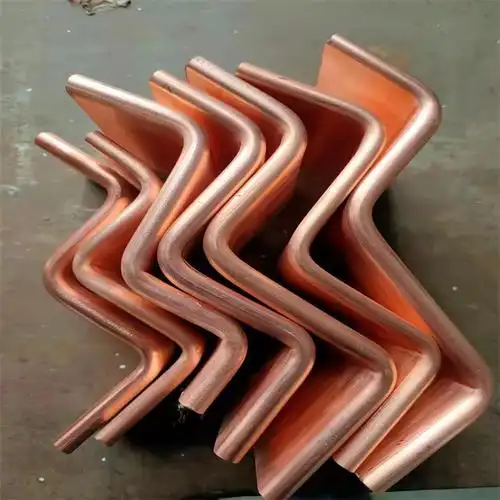
The differences between copper and aluminum
Copper has higher electrical conductivity than aluminum; for the same current-carrying capacity, aluminum busbars typically require a larger cross-sectional area. Aluminum, however, offers advantages in terms of lower density and lower cost, making it a cost-effective choice for applications such as low-voltage, high-current power outputs.
Aluminum surfaces readily form an oxide film, which-if not properly managed-can increase contact resistance. Copper surfaces also oxidize, though the extent and the nature of the resulting compounds differ.
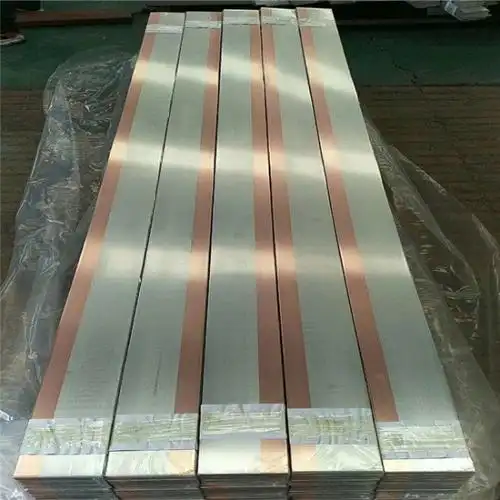
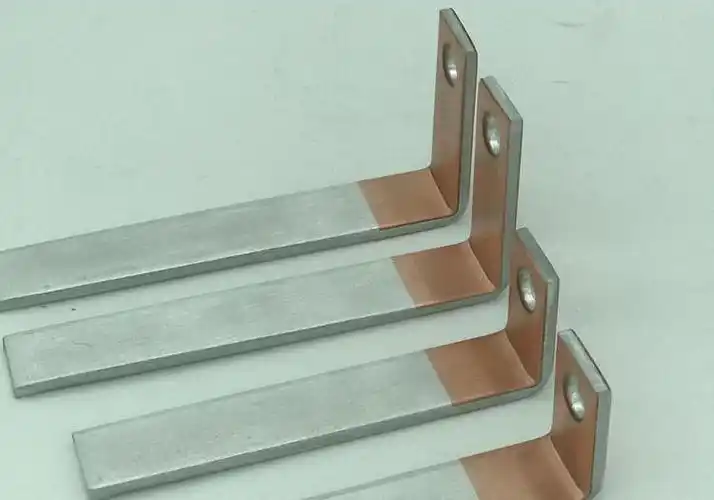
When copper and aluminum are connected directly, electrochemical corrosion can occur, especially in humid or salt-laden environments. To prevent this, transition busbars, transition connectors, or surface coatings (such as tin plating) are commonly used.
The choice between copper and aluminum should be based on factors such as current-carrying margin, the number of connection points, available installation space, corrosion resistance requirements, and cost targets-rather than simply comparing the unit price of the materials.
Contact surface treatment has a greater impact on on-site performance
For bolted copper or aluminum busbar connections, contact surfaces must be cleaned and deburred. Depending on the technical specifications, they may also require tin-plating or the application of conductive grease, followed by tightening to a specified torque in a prescribed sequence.
01
Once tightened, the connections should be marked to facilitate the detection of any loosening during future maintenance. While welding or crimping can reduce the number of detachable contact points, these methods are less convenient than bolting when it comes to maintenance or component replacement.
02
In oil-immersed transformers, where connections are submerged in oil, the treatment of contact surfaces and the application of insulation wrapping must be compatible with an oil-filled environment. Furthermore, the presence of impurities, fibers, or moisture in the oil-if not properly controlled-can compromise the insulation.
03
Dry-type transformers, by contrast, rely more heavily on air cooling and solid insulation; in these units, the temperature rise at contact surfaces and the cleanliness of those surfaces are even more critical.
04
More torque is not necessarily better: excessive torque can damage the contact surfaces or cause the bolts to reach their yield point, while insufficient torque results in inadequate contact pressure.
05
Insulation wrapping and structural support
Don't wait for a short circuit to realize their importance.
01
Beyond their primary function of carrying current, copper or aluminum busbars must maintain specific clearances-both to the ground and between phases-dictated by the voltage rating. The number of insulation layers, the wrapping direction, the treatment of busbar ends, and the spacing of interphase supports must all be carefully coordinated with the overall insulation design.
02
During a short circuit, conductors are subjected to immense electrodynamic forces. If supports or clamps are spaced too far apart or are not sufficiently tightened, the conductors may deform, the insulation could be damaged, or the busbars might even come into contact with the enclosure.
03
For low-voltage output busbars, the required clearances-phase-to-phase, phase-to-ground, and creepage distances-must include an additional safety margin to account for environments prone to humidity or dust.
Different product scenarios require different areas of focus
Lorem ipsum dolor sit amet consectetur, adipisicing elit
Distribution transformers
Low-voltage output busbars are used extensively and feature numerous connection points; therefore, contact resistance and the consistency of bolt tightening are critical.
Three-phase pad-mounted transformers
One must also account for the impact of outdoor temperature fluctuations, precipitation, and vibration on the connection components.

Dry-type transformers
Lacking oil-based cooling and insulation; consequently, the temperature rise of copper or aluminum busbars, the integrity of supporting insulating components, and the cleanliness of surfaces are highly dependent on the ambient air environment.
Pad-mounted transformers
Where internal space is limited, the routing of copper or aluminum busbars, interphase spacing, and accessibility for maintenance must all be considered during the structural design phase.
Consider asking these specific questions during the procurement process
What criteria are used to determine the material, cross-section, and current-carrying margin of the copper or aluminum busbars? Are factors such as the ambient temperature at the installation site and electromagnetic stress during short-circuit conditions taken into account?
How are the contact surfaces treated-for example, are they tin-plated or coated with conductive paste? Are there documented technical specifications for bolt tightening torque and the sequence of tightening?
How are copper-to-aluminum connections handled-through transition busbars, transition connectors, or specialized plating? What anti-corrosion measures are in place for humid or salt-spray environments?
Are contact resistance, tightening torque markings, and insulation clearances verified before the equipment leaves the factory? Under what conditions is the temperature-rise test conducted?
about us
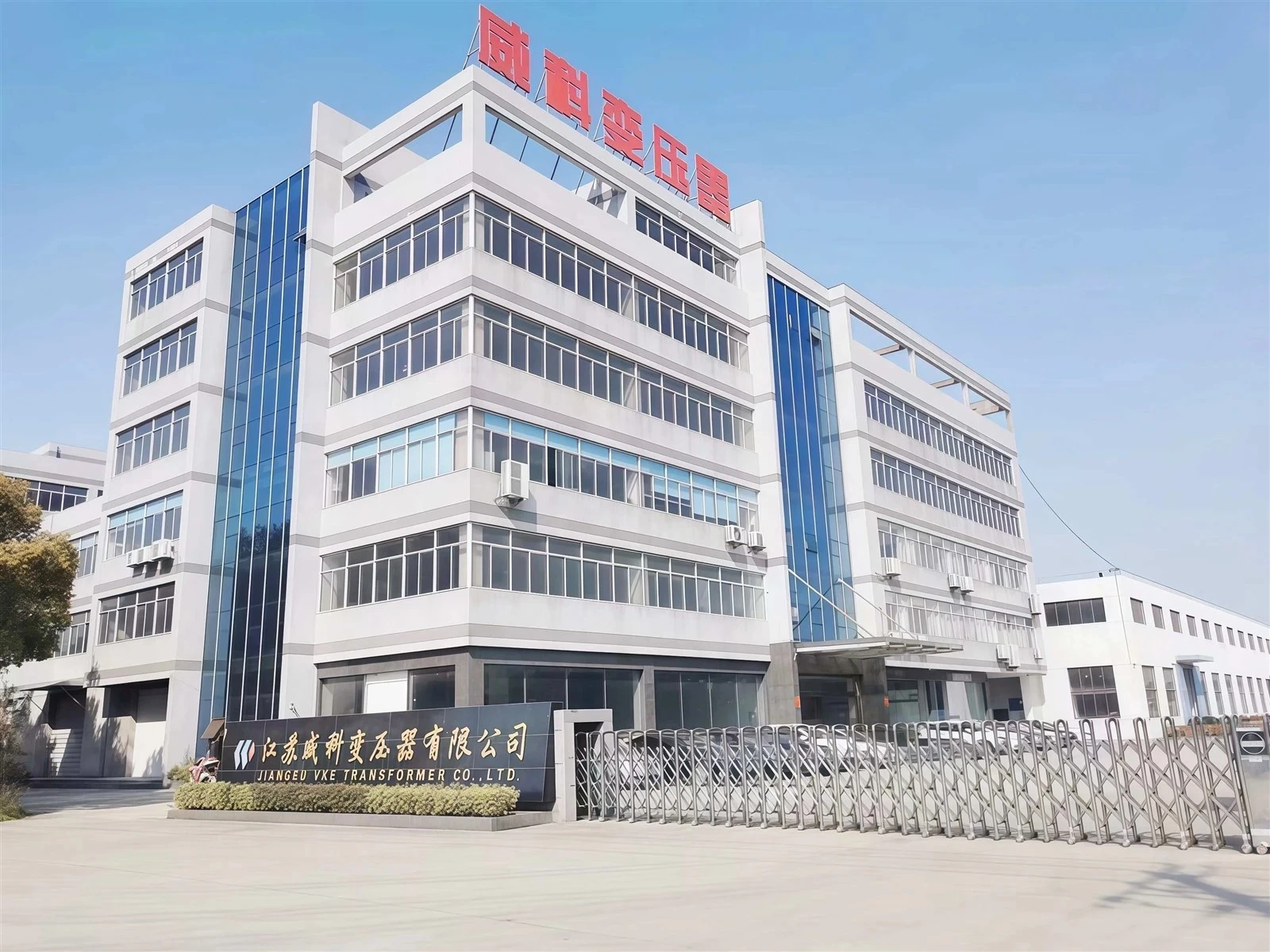
There is no single, universal answer to these questions; the optimal solution for copper or aluminum busbars varies depending on factors such as capacity, voltage rating, installation environment, and cost objectives. Established in 2003, Jiangsu VKE Transformer Co., Ltd. operates two manufacturing facilities with an annual production capacity of 6,000 MVA. Our product portfolio includes oil-immersed transformers, dry-type transformers, pole-mounted transformers, pad-mounted transformers, and compact substations. Our standard production process incorporates rigorous steps such as the precise cutting of copper/aluminum busbars, treatment of contact surfaces, marking of tightening torques, verification of insulation clearances, and comprehensive factory acceptance testing.

One-stop Transformer Manufacturing Factory in China
If you are currently evaluating suppliers, we invite you to visit Jiangsu VKE Transformer Co., Ltd. to inspect our facilities and observe our processes for the fabrication, connection, and testing of copper and aluminum busbars. Alternatively, please share your specific requirements-including capacity, voltage rating, and installation environment-and we will provide a tailored quotation based on your exact specifications.