

Introduction
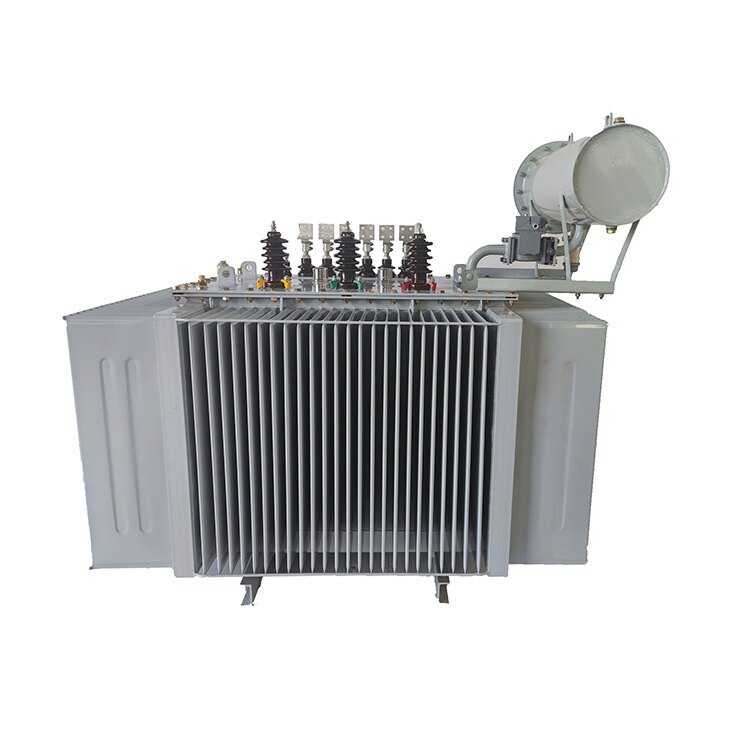
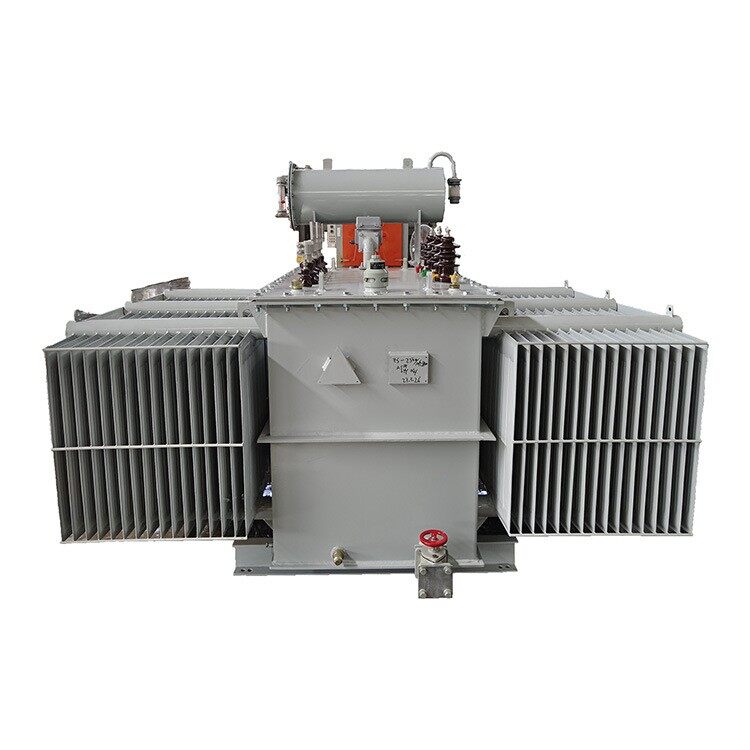
The oil immersed self cooled transformer utilizes oil as its cooling medium. It relies on natural oil convection to carry away the heat generated by the core and coils. This type of transformer does not require additional cooling equipment and has the advantages of simple structure and easy maintenance.
Key Components


Working Principle
The oil immersed self cooled transformer operates based on Faraday's law of electromagnetic induction. When an alternating current flows through the primary winding, it generates an alternating magnetic field. The change in magnetic flux in the core induces a voltage in the secondary winding.
QC-passed 2500kVA 10/0.4kV oil immersed self cooled transformer is moving to shipping area for final inspection and packaging.

Cooling Method
Heat transfer path: Core and windings generate heat → insulating oil heats up and convects → heat transferred to the oil tank wall → heat exchanged with air through radiators.
Oil circulation: Hot oil, being less dense, naturally rises, while cooler oil sinks, forming a circulation. The temperature difference is generally controlled within 55K (per GB 1094.2).
Comparison with Other Cooling Methods
|
Cooling Type |
Cooling Medium |
Max Capacity (MVA) |
Application |
|
Oil Natural Air Natural (ONAN) |
Mineral Oil |
10 |
Small and medium-sized distribution transformers |
|
Oil Forced Air Forced (OFAF) |
Oil & Fans |
300+ |
Large power stations |
|
Dry-type Natural Air (DNA) |
Air |
2.5 |
Indoor or environmentally sensitive areas |
Our transformers are shipped as scheduled

Advantages
High reliability: No mechanical cooling components, leading to low failure rates, designed for 25-30 years of reliable operation.
Low cost: Save 15–20% maintenance costs compared with forced oil cooled transformers (data source: IEEE C57.12.00).
Wide application: Suitable for various outdoor environments, particularly for remote areas or locations where stable power supply is unavailable.
FAQ
Q:Why choose us?
We have a strong R&D team with over 20 years of transformer design experience and familiarity with many international transformer standards such as IEC, IEEE/ANSI, CSA, etc. They have over 20 years of instrument experience. Excellent and stable quality with the best cost-effectiveness. Provide various payment terms.
Q: Can I visit your factory?
A: Of course, we warmly welcome you to visit Jiangsu First Power. Please try contacting our sales representative via email first. We will arrange the most reasonable plan for your itinerary.
Q: What is your minimum order quantity?
A: The minimum order quantity is generally 1-2 pieces, and customized products depend on demand.
Q: Can you provide customized services?
A: Of course, customized services are available, including OEM and ODM. Please let us know your customization requirements for the product, and we will provide you with a satisfactory answer.


