

I. Fundamentals
The Need for Power Transformation
A key challenge in transmitting electricity over long distances is energy loss. To solve this, we use high voltage to reduce the current and minimizes this loss. Additionally, when electricity reaches residential areas, the voltage needs to be stepped down. This ensures both equipment operation and public safety.
The Principle of Power Transformation
The principle involves adjusting the number of turns in the coils on both sides of a transformer. It can either increase or decrease voltage. After electricity is output from the power plant, it is first stepped up at a substation for long-distance transmission. When it reaches the areas near end-users, the voltage is then reduced according to demand.
II. Types
Hub Substation (330kV to 500kV)
It connects several parts of the high-voltage and medium-voltage sections of the power system and gathers multiple power sources. When the entire station is powered off, it would cause large-scale power outages or system disconnections.
Terminal Substation
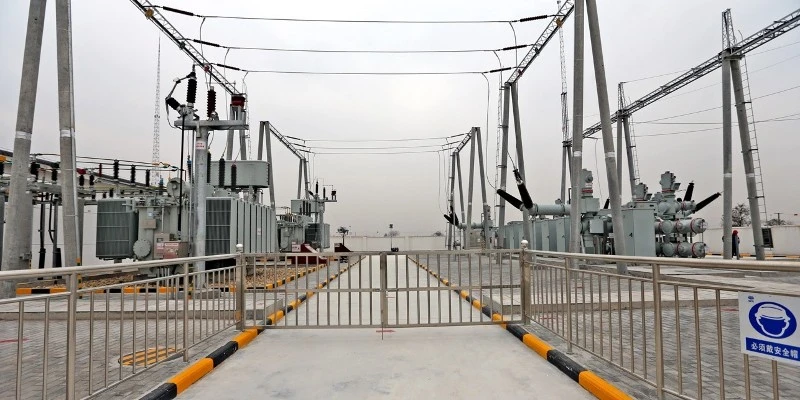
This refers to a substation building, but it belongs to the distribution segment. Located at the end of distribution lines and close to the load areas, it receives 10-110kV on the high-voltage side, and supplies power to users after stepping down the voltage.
Intermediate Substation (220kV to 330kV)
It is located at the interfaces of main looped lines or major trunk lines within the system, collecting 2 to 3 power sources and several transmission lines. On the high-voltage side, it primarily handle through-power while also stepping down voltage to supply local users. An outage here could lead to regional network disconnection.
Regional Substation (220kV)
It acts as the primary power source for a specific district. A total shutdown would would disrupt the power supply to that region or city.
III. Substation Equipment
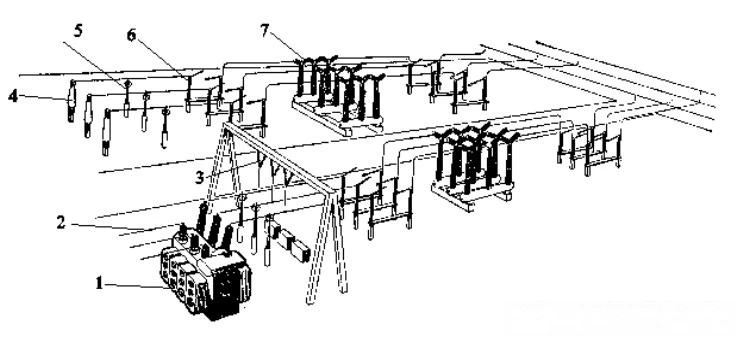
The devices labeled in the diagram above are:
2-Conductor
3-Insulator
4- Instrument Transformer
5-Lightning Arrester
6- Isolating switch
7-Circuit Breaker
In addition to the equipment shown in the diagram, there are also capacitors, bushings, wave traps, cables, reactors, and relay protection devices.
IV. Operation & Maintenance
Equipment Operation
One of the core tasks is performing equipment operations to ensure the stable functioning of the power grid. The dispatch center will instruct the substation to execute specific operations, such as opening or closing a circuit breaker.
Routine Inspection
Key tasks include: conducting infrared temperature measurements, checking transformer oil levels, inspecting switchgear rooms, etc.
If abnormal data or equipment conditions are detected, a defect reporting process must be initiated immediately, followed by arranged repairs.
Safety Management
O&M personnel bear the safety responsibility for all individuals inside and outside the substation. Visitors may be unfamiliar with the high-risk areas. Entering the wrong bay or improper actions could lead to grid failures or personal injury. Therefore, operators must remain vigilant at all times to ensure everyone's safety.
V. Development Trends
Intelligence and digitalization have become the main directions for the future development of substations and the entire power grid. This transformation will improve grid operational efficiency, reduce manual intervention, and further enhance the reliability and security of the power system.